



Hi Paul,
I can't tell why Eric choose that winding patron. Maybe he can answer that question 😉
Yes, I made changes over and over. I tested so much.
SFTP cat5e sounds just better in my system. I have tried at least 5 UTP versions. Also a CAT8 version, but the CAT8 clearly sounded worse (more woolly). I think CAT8 can transport noise better as well
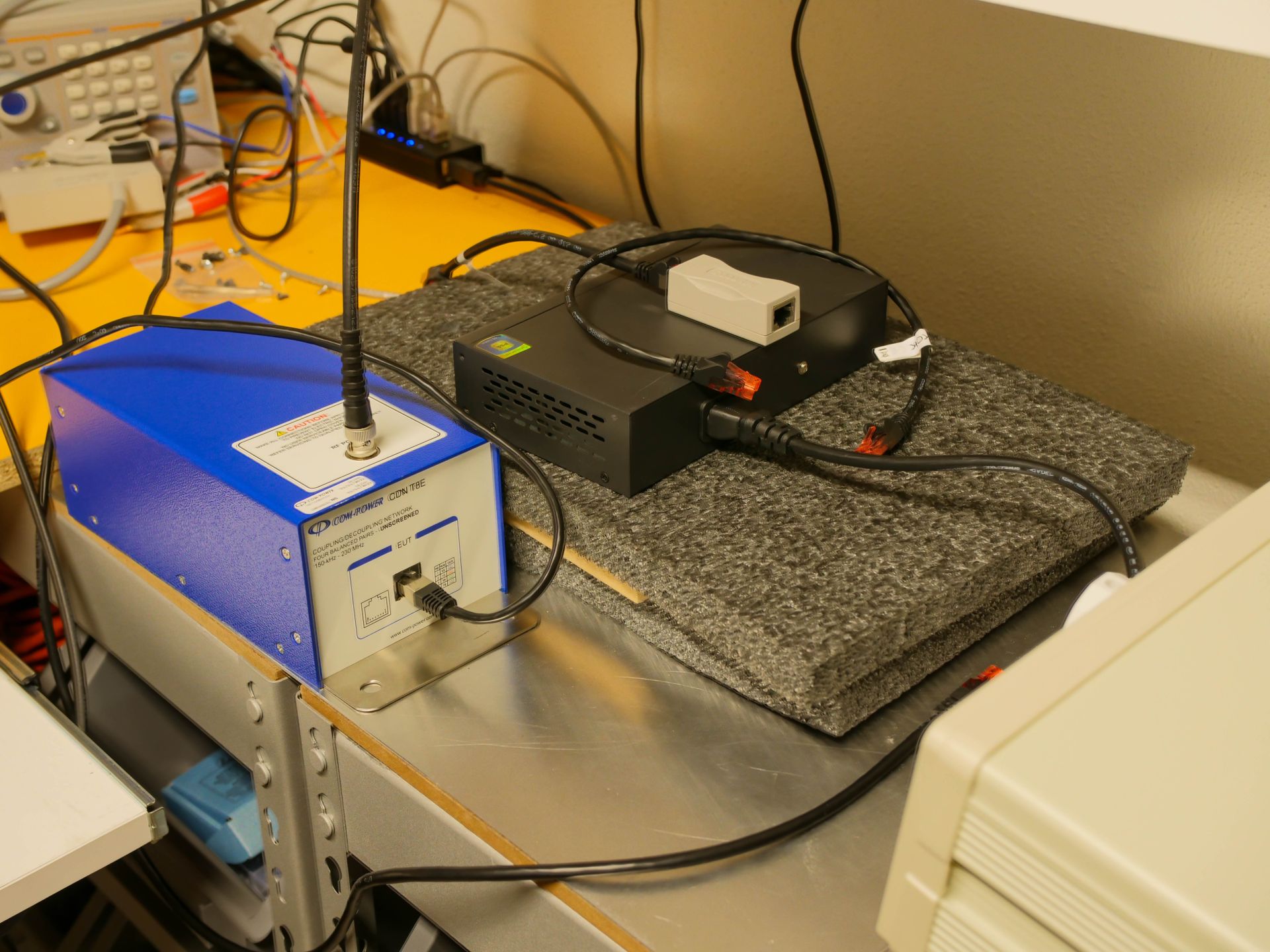
You can see in the picture that I don't have a shield connection at the switch 🙂

Wow, you must be trippin’ Wijnand!
Maybe comparable (in a limited way) since network switches seem to have an improving effect on SQ when you use them in series, but not so much in the long term I understand. Curious how more than one “2 or 3? core boxes” will sound over time.
You could call it the Wine&filter ;-). Wijnandfilter
You have been sharing so much, I completely missed or forgot you use an internally PF clocked Dlink DGS-108 switch. Thats why I proposed the externally clocked eR in the equation (still valid though).
The PF LAN filter is for other frequencies I suppose, and still essential.
Great about using the interrupted shield at the server connection, I wasn’t sure. I think it is better to not share with the server. The plug could be replaced with a better quality metal shielded plug, not sure if that would be audible.
But the ground drain wire is still inside the double choked SFTP from the 2 core box all the way to the server, correct?
I find it all pretty amazing! Kudos for your perseverance.
There actually are two things of importance for audio networks.
1. Noise
2. Clock synchronisation
Unfortunately those two are biting each other. Noise can be prevented by using high grade power supplies and or noise can be canceled by ethernet filters.
When there's almost no noise at the ethernet signal the blockwave will stabilize and push other devices with its stable signal. Other devices will slowly follow the rhythm of this stabilized stream. This means the clock of the audio device will synchronize (in a certain amount) as well to this stable signal, but the audioclock should not run at 25Mhz, it should run at 24.756Mhz. When the audioclock is out of phase the sound will darken.
The winding patrons of cablechokes can cancel noise and it can cause or prevent clock synchronisation. The cleaner the signal the more important it is not to create induction at the signal. Induction will cause more explosive pulsations which will cause clock synchronisation.
So the real deal is to create a noise free blockwave, but also preventing the network clocksignal to cause trouble.
What I have done Yesterday with the Ultra clock switch was really incredible. But I must switch off this clock each time after listening. This will prevent the clock to stabilize. Really the first few minutes are on a level that you can't even imaging even when you have heard it 🙂

Wijnand, what is talking against the fact that the noise reduction (filtering) is now just making your last DAC clock work perfect, since it is no-longer hit with "any" noise (there is always some level of noise)?
Couldn´t it be that simple, that it is actually only about making the last clock, in your DAC, work as exact as possible?
The other clocks are then actually not involved, from a clocking perspective.
I think ERIC is very measurement focused. Not sure if that is actually the most reliable method but i assume he listens as well. From what i understand 8 windings also has some scientific background, as well as being something he found in his measurements. (if i remember that correctly?)
I know i saw them linking to a very mathematic/scientific document that went into details about similar logics, using ferrit cores, but for another use-case of course.
Having said this, it is of course very possible that they have not tested things that Wijnand is now suggesting!