




Listening
Contents
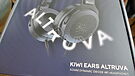

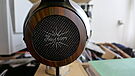
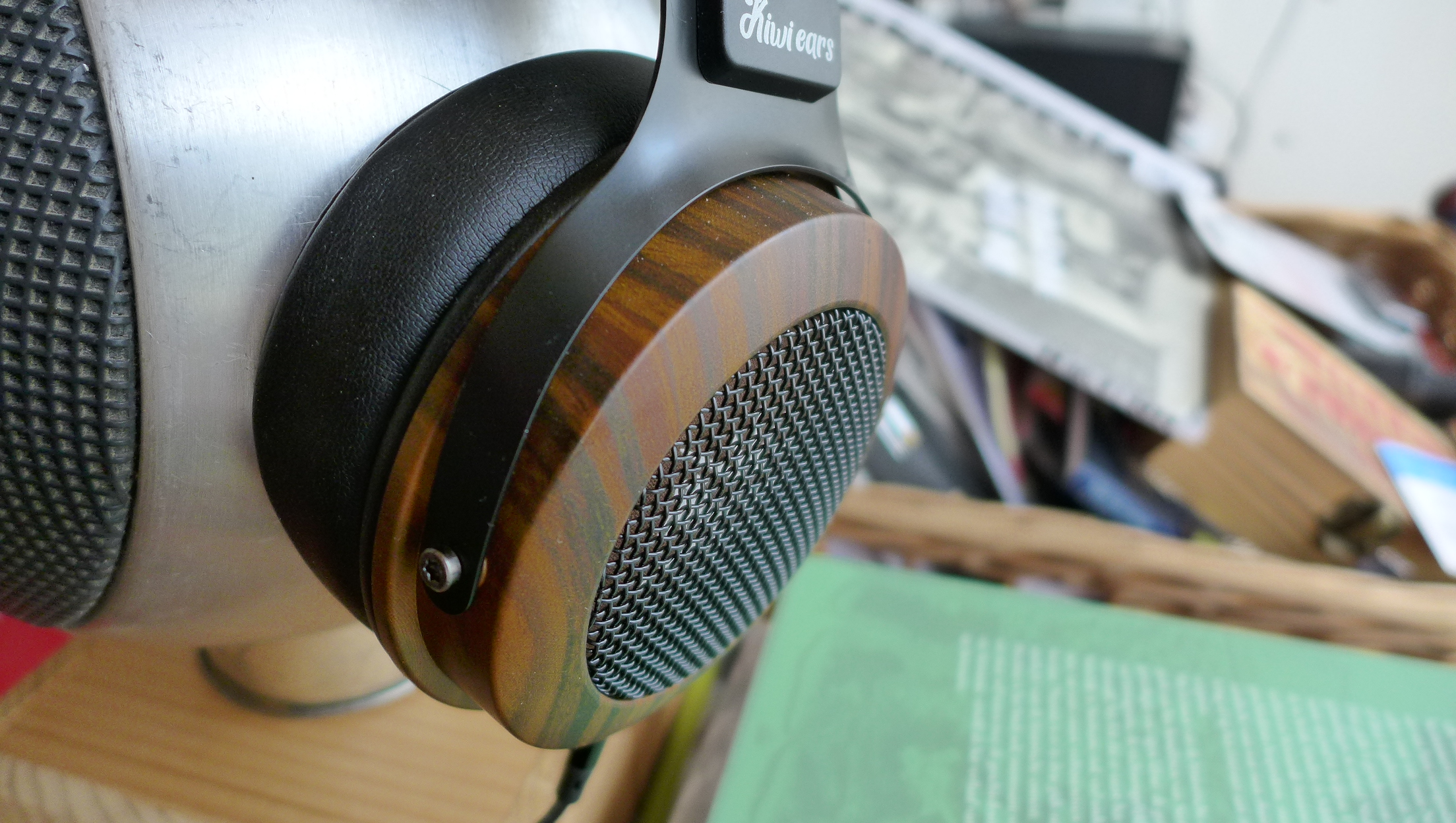
We broke in the Altruvas for a few days and noticed immediately upon unpacking (and secretly listening) that these cans sound very good. We had the Altruvas on our desk during the summer months and what struck us was that we often chose them when we just wanted to listen to music. And that says something, considering that we have a choice of roughly 10 over-ear headphones in the price range from £50 to over £5,000.
Let’s take a look at our listening notes.
“Sounds particularly pleasant”
The Altruvas are certainly not free of colouration. The familiar “smiley” in the EQ, where the bass and treble are accentuated and the midrange is slightly reduced, is clearly audible. At Alpha-Audio, we usually prefer a “neutral, balanced reproduction”. With the Altruvas, we are willing to set these principles aside. We are drawn into the music and, in addition to the music, we also hear the dimensions of the recording space, the reverb and other effects. It doesn’t really matter what genre we play. It all sounds “fine & mellow”.
“Generous treble.”
We experience a lot of headroom in the music; the highs are tuned, but in a pleasant way. Not too sharp, a touch warm and never exaggerated. Let’s take Jacques Loussier’s famous tune as an example again (Little Fugue, in case you’ve forgotten). The track starts with percussion as the dominant instrument. The drum kit was recorded with microphones close by and around it, which gives it a spacious effect.
If we pay attention to the rimshots and the floor tom beat, we hear a reverb. The decay of this sound is extremely critical for a realistic reproduction. Too little and it is dry, boring. Too much is too much, excessive, tiring. The Little Fugue is a difficult track, especially with headphones. There is a lot of dynamics, the piano can quickly become too big and the coherence between the double bass, percussion and piano can quickly be lost. The Altruva performs excellently. In fact, we are impressed. We have to go many steps higher in price of other headphones to achieve a comparable level.
“A tad warm”
Yes, but not as warm as, for example, the aforementioned Meze 99 Classics Gold. At the time of the review, the Meze was well suited to standard headphone outputs such as a laptop or media player. On a more powerful headphone amplifier, it quickly became too much for the Meze. It sounded too warm, and became a little muffled. The Altruva performs well on different headphone amplifiers and the reproduction gains in transparency and layering.
“No excessive or overpowering bass”
We did some mixing on an acoustic track with the Kiwi ears Altruva and it went very well. We just used the headphone output of the Macbook Pro. When mixing per channel, we could clearly hear the differences between various effects, imaging and panning, and mastering also went well with these headphones. They are very transparent and their comfort and light weight mean that it is no problem to wear these headphones for long periods.
We took Martijn’s advice to use Peter Gabriel’s album i/o as a test to see if a complex recording remains audible and enjoyable.
We played Olive Tree (dark side mix). This track has so much sub-bass that it can easily overwhelm the vocals and the rest. This is especially true with tuned headphones like the Altruva. The chorus (at 1:22) is close to or at the clipping point, but it just about works with the Altruva. In any case, it remains listenable.
The ‘Martijn test” is whether it sounds so intense that you take off your headphones. Well, that didn’t happen. Passed the test! And we can hear the differences between the bright-side and dark-side masters of the album I/o very clearly.