





Measurements and conclusion
Contents
We also connected the Kora TB200 to the Prism dScope III to examine its response, noise floor, power, and distortion.
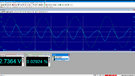
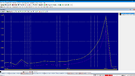
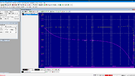
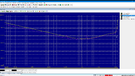
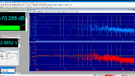
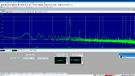
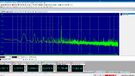
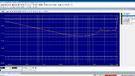
What we see is an amplifier with very little to no NFB (negative feedback). The opposite of Class D, so to say. Partly because of this, the noise pattern is somewhat unstable and the THD+N is not extremely low. But distortion around 0.03 – 0.04% is more than sufficient and the amplifier is certainly quiet enough not to be a nuisance. This is clearly a design choice by Kora.
We also see that this TB200 easily achieves the promised power of 100 watts into 8 ohms. At 4 ohms, we see 170 watts, but that is at the point to graph shoots up. 180 watts is achieved according to specification. So, no problem here!
The response is linear. Phase runs from 90 degrees at 5 Hz to 0 at 1 KHz and back to -50 at 20 KHz. This can be caused by anything, but usually by coupling capacitors. Or another network with capacitors and coils (think of a Zobel network).
All in all, we see an amplifier that performs very stably (power is easily achieved), uses very little feedback, exhibits very little crossover distortion (no residue) and has opted for very little to no negative feedback in order to get that ‘flow’ and excellent rhytm.
Conclusion
Alpha Audio reviews many amplifiers. The dominant characteristics, how an amplifier is tuned, are often quickly identified, allowing you to categorize an amplifier.
Sometimes you encounter something surprising or unusual, but often these amplifiers do not stand the test of time well.
Every so often, you hear something that immediately sounds right, but also makes it clear that the amplifier is not easy to label. The Kora TB200 is such an amplifier.
This is an amplifier that makes you forget you are reviewing; you are immediately immersed in the music. It is tempting to try to convey this feeling with superlatives, but let us just say that the Kora TB200 is Alpha Approved, with a wide smile. Once we have finished our review work, we turn on the Kora TB200 to enjoy some music.
Hello,
I’m currently testing a Kora TB140 in my system, replacing my Audiomat Aria. My speakers are PBN Audio Sammy, with a Metronome DSS streamer and a Lampizator Baltic4.
The sound is very good, more detailed, but the magic of the highs and mids is lost compared to the tube amplifier.
The amplifier is plugged directly into the wall outlet, without a crossover. The speaker cables are Organic Audio Reference, and the interconnect cables are Grimm Audio TPR or SQM.
The Kora has only been broken in for four days. Do you think a longer break-in period is necessary to get more midrange? Is the TB200 better for the midrange? Does it perform better at low volumes? I have to set the volume to 24 to hear all the audible frequencies.
Hello,
I think the review states that the TB200 and TB140 are very different amplifiers. Having said that, there’s always a question of balance in a system and a preference for sound signature. I have never heard the Audiomat Aria, so I don’t have a reference how it compares with Kora.
The number 24 of the volume control means nothing, as the manual states. But having a to need to turn the volume up to get a better balanced sound often indicates a loudspeaker which demands a lot of current or current delivery stability across the frequency range. This is where the TB200 is much better, current delivery and control. And which becomes quite evident if you hear the 140 and the 200 side by side.
4 days is a bit short, allow for two weeks. Best thing is to play for two weeks, then have a listen and if you still own the old amplifier, put that back and listen for what you are missing or which improves for you. If your dealer can arrange this, ask for a TB200 for comparison and see if that fits your system or preference better.
Hi Martijn !
thank you for responding so fast !
I have made a call to my dealer, he will send the TB 200 as soon as possible from Kora for the comparison in my place.
At the end of the week, the TB 140 will have over 350 hours burn in, i will do an another comparaison with the Audiomat Aria.
All best
Philippe