





Overall impression of the Kiwi Ears Orchestra II
Contents
What immediately stands out is the calmness of the sound. Kiwi Ears has succeeded in making 10 drivers sound coherent. We hear no noticeable peaks or dips in reproduction during transitions between frequency ranges (e.g. from bass to midrange, an area where IEMs are sensitive). We did experience this with the Astrals, where the transition to one dynamic driver was clearly audible. With the Orchestra II, it all sounds beautifully smooth. Notably, the intelligibility and presence of the voices is where the Orchestra II excels.

Bass
For the low range, we listen to Peter Gabriel’s “i/o” album. Two mastering engineers were given free rein on the tracks, resulting in two completely different versions of the same recording. Fascinating for those who want to discover how much of a difference that can make. Both mixes are ample in compression and other effects tuned to the limit of what is permissible. But strangely enough, in a pleasant way. At least, if the audio system has sufficient resolution to untangle the web of sound.
In the test, we heard the difference between EarMen’s CH amp and the Sennheiser headphone amplifier. The latter has more control over the in-ears, making everything sound slightly more dynamic and rhythmic, with a pumping bass that is downright impressive.
With Peter Gabriel, we hear that the Bright-Side Mix sometimes goes even deeper in terms of bass than the Dark-Side. We hear a layering and control that we haven’t heard so well before. When we play “Giorgo”, from Daft Punk’s “Random Access Memories”, we hear how the kick drum, the bass and later the Moog sound distinct from each other while playing tightly in sync. We can clearly hear the texture, a layering that draws us into the music. And Giorgio Moroder’s voice also has more facets than we heard before.
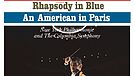
In classical symphonic works, we hear the double bass section resonate and feel the timpani. We listen to Leonard Bernstein’s 1958 recordings of “Rhapsody In Blue” (with the maestro on piano), “An American In Paris” and “On The Waterfront”. We are completely immersed, the tape hiss is not distracting at all. We end up listening much longer than we intended…
Mid
We can try to be brief here. Until now, every Kiwi ears product has distinguished itself with a more than above-average midrange presentation, regardless of price range. That is promising for this top model.
Well, the Orchestra II does deliver! Triggered by the voice of Giorgio Moroder, we listen to even more speaking voices. Coincidentally, we also have to edit a few podcasts, and here too, we notice how precise and layered the voices sound.
With podcasts, it’s nice when there’s a difference between the voices. With tone control, compression and placement, it’s possible to make a conversation between four people lively and at the same time so balanced that the listener doesn’t get too tired. With the Orchestra II, it’s very pleasant to work with Logic Pro, the digital workstation we use to mix and master multitrack recordings. Everything we do is noticeable. As a note to self, we write down that listening to the speaking voice is a very good way to assess the midrange.
Back to music; we listen to Jennifer Warnes, album “The Well”. “Invitation To The Blues” sounds as smoky as it should. The voice is recorded with the microphone at short distance. We hear everything; breathing, the closing and opening of the mouth (without it becoming distasteful, rest assured). It adds a dose of authenticity and a live feel to the track. Next, Warnes’ interpretation of Billy Joel’s “And So It Goes”. This really leaves us speechless. With in-ear monitors, it’s already as if the music is being projected into your head; with this recording, it’s overwhelming. Warnes gives this tune new meaning and depth. Beautiful!
High
The first thing we notice is that the reverb is audible down to the smallest detail. We hear reverb added in the studio and natural reverberation, namely the room acoustics. The dimensions of the space (such as Joe Jackson’s “Night And Day”) are easy to determine. We can also hear the different digital versions of the same track very clearly: FLAC, WAV, bit depth, oversampling, streaming platform. We are once again confirmed in the quality of Audirvāna, on which Qobuz and Tidal sound so much better than on other playback software.
We play “Spiral Stair” by Mammal Hands, and of course Jacques Loussier. This time to hear how accurately the Kiwi Ears Orchestra II reproduces the soundstage, how balanced the reproduction is. Is it bigger than big, are things like reverb reproduced too generously? With “Little Fugue”, the high frequencies can quickly become too much; cymbals flying over us, the piano being reproduced too large. And, not unimportantly, the hi-hat. This can be heard throughout almost the entire piece; modest, but very constant. We hear everything in the right proportions and beautifully in the space. “Spiral Stair” also sounds as we know it; in an intimate setting, recorded up close and with enormous dynamics.
There is something special about ADD recordings; analogue recordings that were digitised at the beginning of the CD era using the Sony PCM 1600 system. These Sony processors were not stand-alone ADCs as we know them today, but were part of a larger digital audio system that used a conventional U-matic video recorder as a storage medium. The analogue audio signal was digitised by the processor and then encoded into an analogue video signal that could be recorded by the VCR. The resulting U-matic tapes were sent to CD pressing plants to create the glass master for replication.
What we experience: ADD recordings sound smoother, more coherent, more cohesive. On CD, of course, but also via a streamer. We suspect this is due to the tape system that served as the source. Tape apparently ensures fluidity in the reproduction. There are many background articles about this on the web, so please read on if you find this interesting.
We know Linda Ronstadt mainly as a country singer; in the 1980s, she made three albums with conductor and arranger Nelson Riddle, bundled in a CD box set called “‘Round Midnight”. The 32 tracks are a collection from the Great American Songbook; compositions from musicals from the period 1920-1950 by composers such as Hoagy Carmichael, Rogers & Hart, Nat King Cole, Gershwin and Ellington. Recorded analogue and digitised for CD. What is particularly striking is the imperfection. Ronstadt’s “s” is very present, yet it does not bother you. On the Orchestra IIs, Nelson Riddle’s sometimes saccharine and thoughtful orchestral arrangements are a treat (he became famous for his arrangements for Frank Sinatra in the 1950s and 1960s).