




Today I have built two new cables with Ferrite cores. This time I have used 100% copper instead of CCA. This brings that extra touch in music. That few % more color, not warmer, but better sound color. I have filled the cores with warm glue.
We had the discussion about more equipment, more power supplies would reduce sound quality. Well I added a D'Link AQvox between the Jcat and the Dac and powered it with a Super 10. Between the JCat and the switch I have a ferrite core cable and also between the switch and the DAC. In my opinion this is as good as it can get 🙂 Really better than without the switch. Only the clock switch brought even better detail, but in comparison to the current solution. It's makes not so much of a difference!
The complete stream
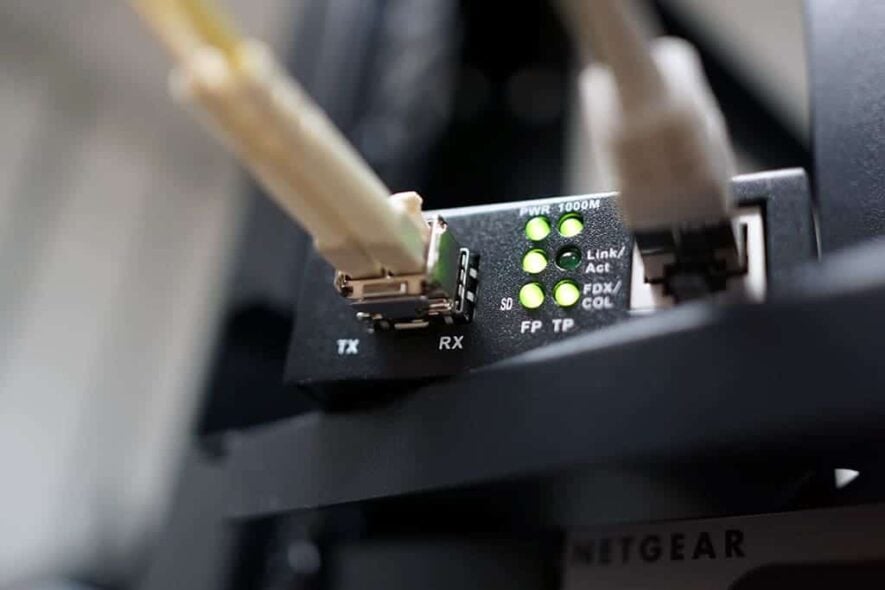
1. Wan fiber converter on Farad Super 3 - 5Vdc with QSA Red/Black fuse
2. Router Draytek Vigor2962 modified to work with Farad Super 10 - 12Vdc (Stock fuse) (fancy fuses make the sound warmer, which is less good)
3. PC streamer with Jcat Netcard XE fed by a Farad Super 3 - 5Vdc (Stock fuse) (fancy fuses make the sound warmer, which is less good)
4. AQvox switch Fed by Farad Super 10 - 5Vdc (on both sides of the AQvox a ferriet Cable) (Stock fuse) (fancy fuses make the sound warmer, which is less good)
While listening no extra connection to the ethernet system.
For sure it's not the cheapest solution, but to my ears it works better than the solutions with very expensive streamers alone. Improving the complete stream matters. It outperforms my own music library on SSD.
I think it's time to enjoy listening for a while 🙂
@Tobias thanks for pointing me in the direction of the Ferrite cores. They really did the trick 🙂

Thanks for sharing again!
What is that 100% copper instead of CCA? Can i buy that or is it DIY only?
Since i am convinced that it is all about noise then I am thinking that if you can have an extremely low noise floor early in the signal chain (as the WR902AC V4 Wifi extender seem to have when paired with really clean power) then there is no need to add additional electronics and power supply, in that particular combination. But i haven´t of course tested all possible combinations, like yours for example, :-).
Yes you can buy it 🙂
Most ethernet is sold as CCA which is an alloy of aluminium with a copper layer. This is the cheaper and lighter variant. When it's 100% copper they will always put that in the specs as well as in the case of CCA.
Just like you. I haven't tested your situation as well. I will look into that for sure and maybe I will learn that there's an even better way 🙂
The only thing that I can say is that this situation can compete with the very best streamers. From 2014 I bought my first high grade streamer and after this one I have had 5 others in my system. Not one outperformed the current situation.
I could install the rabbit ears on my DAC and on one of my PC streamers to test the WIFI solution, would that make sense?
Not sure what a PC streamer means exactly but now "knowing" you i guess it is some sort of well built Rasbarry Pi, with ultra capacitor conditioners and stuff to keep a low internal noise floor?
My focus lies solely on making sure that the streamer has the lowest possible internal noise floor, when in operation, so that it can output the same to the DAC. At the moment i don´t even have a fancy audio streamer my self... I only run the Yamaha WXC-50 which is limited in its own internal noise floor, i assume.
So basically, whatever i connect to that streamer needs to have the lowest possible noise floor output, to keep the streamers noise floor as close to its own ideal noise floor as possible.
In my case it means that i only connect the WiFi extender, with battery power, to my streamer, using the ferrit core cable. Nothing else is connect to the streamer inputs.
That was an attempt to answer your question 🙂
Well maybe then I should use my router's Wifi directly on my DAC streamer. Then there is nothing in between.
But first I like to share a theorie of which I think the problem is really based. A problem that you will not have when using Wifi. I even think that when you deal with this problem then you won't need Wifi for the reason you thought you needed Wifi 🙂
Actually I should draw it, but then I first need to post it on another forum and then connect it here. That's what I did with the other picture's I posted.
I will try it with words and to make it more simple let's think ethernet runs on 25hz instead of 25Mhz. So the ethernet runs at 25hz.
1. We have a Router (25)
2. We have a PC (26)
3. We have a Switch (24)
4 we have a Dac / Streamer (23)
These ethernet devices need to run at the exact same speed to communicate with each other. Each device has a crystal with a certain source speed. Not one device has the exact same source speed. Let's think that each device runs on the source speed that I have put behind it. Now we're going to run data downstream from the router to the DAC.
As soon as the router starts talking to the PC the PC will synchronize automatically to the router's source speed. So the PC will meet the 25Hz. The PC will start talking to the switch, but now the switch must synchronize to the speed of the PC. The switch will forward the data to the DAC. This happens. I have measured this.
Before I go on I must explain that the blockform that is sent will be slightly in another time frame. Because it must pass a galvanic isolator transformer on each output and input. So between two devices are two transformers. Lets say the blockwave is delayed by 4 nanoseconds. Then it can be stored in the receiving devise and sent to the next device. Due to the fact ethernet communication goes in both ways. This means when a device is answering or talking back. It must be flexible to do this on its own terms. When it talks back there will be (due to the transformers) a few nanoseconds delay as well. But a complete clock cycle is 40 nanoseconds. This means now the device that first sends the data must see to receive the answer. This means it must synchronize to the answer speed. Before it can send new data at its own speed.
For audio the only thing that matters is the downstream. The answers are not audio related. When we only would have downstream (one way) I think our problems would be solved. I think these crystals that float around cause the main trouble we hear. Noise comes in second place.
Well the trick is to stabilize the downstream. Make the power downstream bigger than the power for the answering power. This way the sending crystal becomes some kind of a master. I have done a lot of tests that point in the direction of theorie. Also the latest with the ferrite core which I will explain.
The ferrite core in the last section of ethernet does the complete trick in my system.
When I put ferrite cores in the other sections as well they seem to do almost nothing. Then I have lowered the data power in each section.