



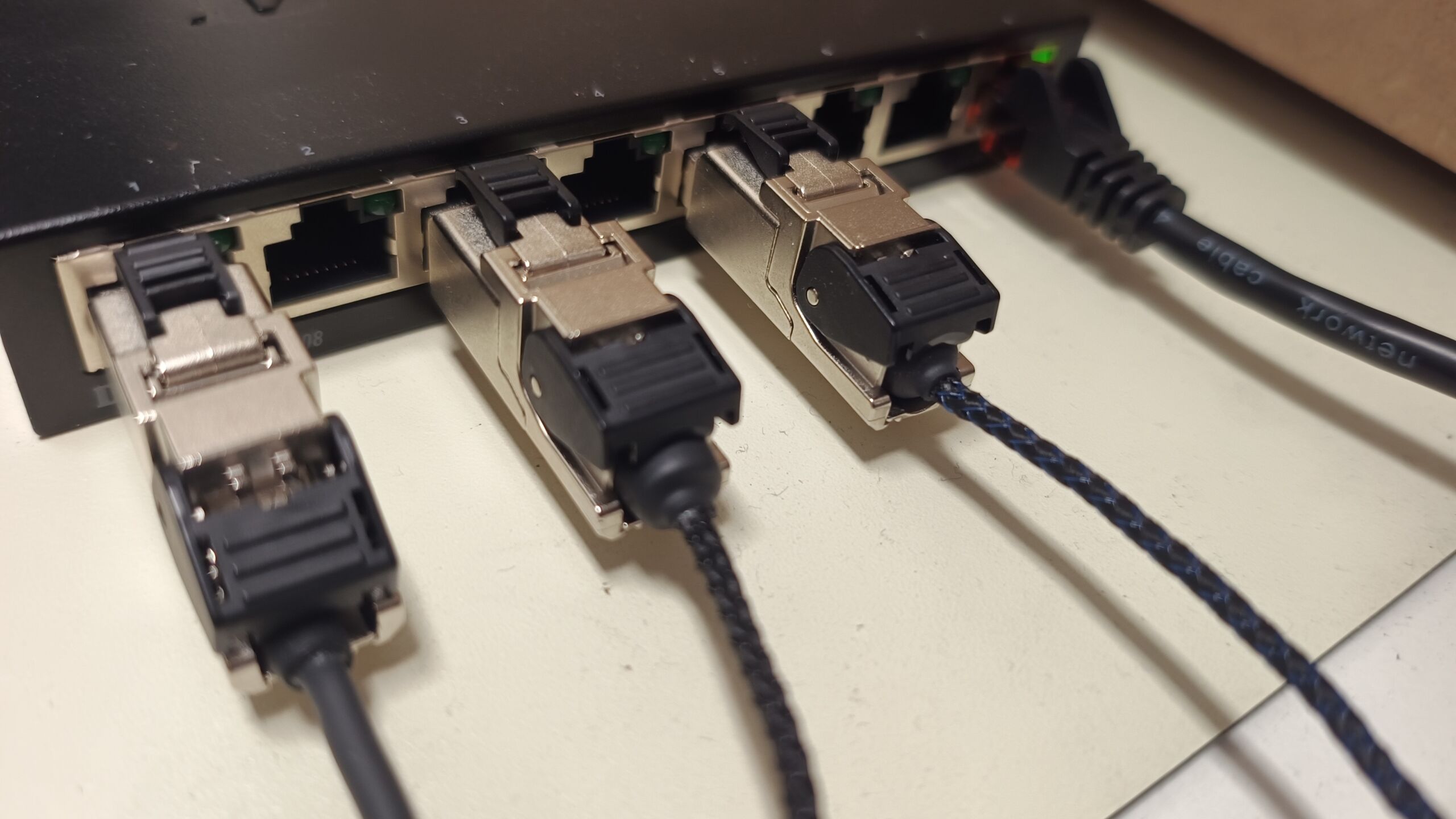
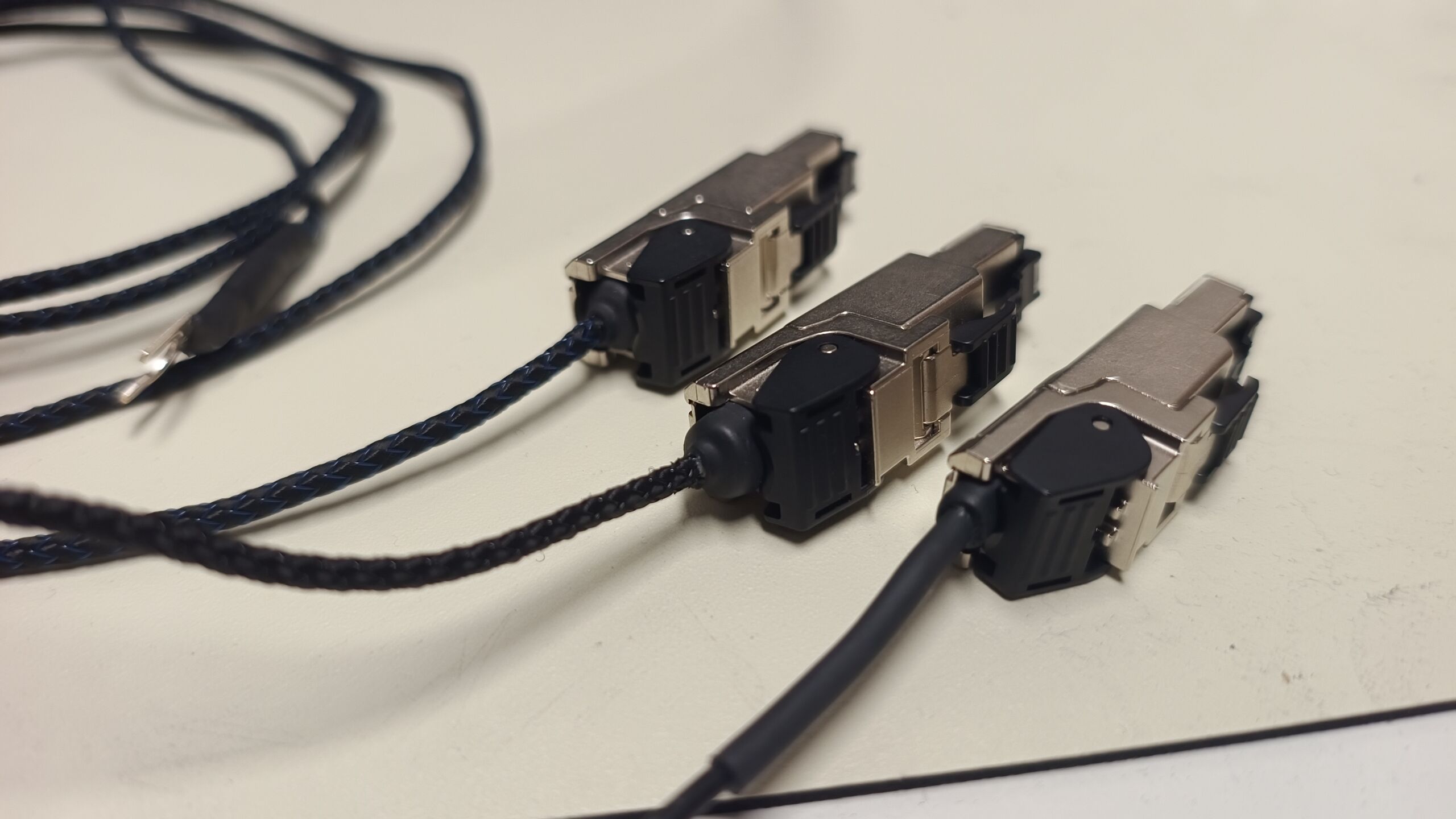
Last year, we attended an interesting demo by Audioquest. It was about a grounding system for switches. Basically, it was just a nice Telegartner plug with a high quality cable leading to a plug that, in turn, connects to an AudioQuest Niagara with Ground Noise Dissipation. The result was clearly audible! And that was reason enough to investigate it further.
We’ve been working on networking and its impact on sound reproduction for quite some time now. This involves measuring countless switches, as well as experimenting with power supplies, filters, and grounding switches.
Some switches have a grounded plug, but others require an DC-adapter. And you can’t just ground those adapters. Although some models do allow it via a connector on the case.
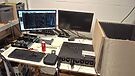
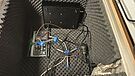
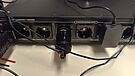
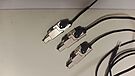
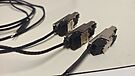
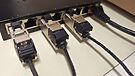
One solution is to use a grounded network plug. After all, the port also has two metal clips that are connected to ground (via the housing). Audioquest offers this method, although it isn’t actively promoted or sold.
AudioQuest Switch Ground System
The Audioquest system essentially consists of a high-quality conductor attached to a sturdy Telegartner plug and a high-quality Audioquest Schuko-plug. You can plug this into either a power strip or a Niagara unit equipped with a Ground Noise Dissipation system. The latter system actively filters the ground, which should produce an even better result.
We’ve often heard—and seen in test results—that proper grounding of a switch makes a difference. Some switches are more sensitive to this than others, but it’s clear to us that the difference is audible. We’ve experienced this regularly in the listening room.
Phase Noise and Noise Measurements
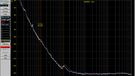
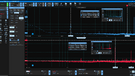
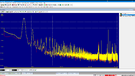
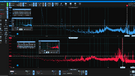
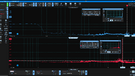
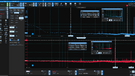
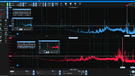
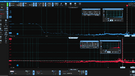
As always with these types of tests, we’re measuring using the Volumio Primo’s clock. This clock directly drives the Sabre DAC. In short: if we see anything here, it affects the conversion and thus the playback quality.
From a measurement standpoint, it’s very subtle. We observe that grounding the switch results in a slightly lower noise level in certain areas. You can see this in the measurements from the spectrum analyzer (red = differential-mode noise, blue = common-mode noise). It’s very subtle, but consistent.
Unfortunately, what you don’t see here in the images—but do see during the measurements on the Aeroflex PN9000—is that the number of “spurs” is much lower when we ground the switch and route the power supply through the Niagara 3000. The difference is actually quite significant.
Spurs
Spurs in a measurement are unwanted discrete peaks that rise above the normal noise floor. They are also shown as “spikes” in the measurement. The PN9000 does display these during the measurement, but—unfortunately!—removes them once the measurement is complete.
The difference from phase noise is that phase noise manifests as a continuous noise level around the carrier signal. Spurs are clearly defined interference components at specific frequency offsets.
Spurs are often caused by power supplies, PLLs, digital circuits, or external interference and, depending on the application, can have a greater impact on signal quality than the noise floor itself.
An oscillator with low phase noise but many spurs is therefore not necessarily better than a slightly noisier one with a clean spectrum.
Does grounding a switch make a difference? Absolutely. While we may not immediately see a significantly lower noise floor or phase noise, we do see far fewer spurs. And that also affects the sound quality!
Is it audible?
Yes. This is definitely audible. But we secretly already knew that after the demo at the Dutch Audio Event. However, it’s always good to check it in a system you know better. In our case, on the Alpha Audio reference system. And for a long time now, that system has been running a simple but excellent setup based on a Dlink 108 with a nice linear power supply and a supercapacitor buffer.
What this Audioquest system does is actually quite nice and subtle: it subtly opens up the soundstage a bit more. At the same time, it brings more calmness and air to the sound, which in turn gives the sound a bit more calmness. It doesn’t add any coloration, which is a very nice thing. You don’t want to add coloration just for the sake of it. At least, that’s our opinion.
This is one of those tweaks you didn’t know you needed. It doesn’t make a drastic difference right away, but at the same time, it’s something you’ll never want to live without again… I’m sure you know what we mean.
Our tip: ask about it at the store… just give it a try!
Man this is really cool. I think you’ve another article on grounding switches? Not sure, need to check that one (if so). I’ve a d-link powered by an ifi ps plugged into a wall receptacle, connected to a wifi receiver with a short Ethernet cable. The d-link does have a grounding screw on the casing. What would be the best way to simply ground it? It’s sitting next to the wall well away from my power strip conditioner. should I get a grounding box? Pardon the noob query, just want to try some solutions on the cheap.
Just realized one can purchase a ground wire connected to a ul 3 prong just for this purpose. Thank you for all the great testing to get the most out of these simple tweaks 🙏🏼