




Intro
Contents
After more than eight years of research into network influences within a hi-fi system, it is safe to say that every link counts. Energy, cabling and also the underlying network. Not because of the data that goes over the line, but the noise that travels with it over the network. Japanese manufacturer DELA (formerly Melco) knows this all too well, too. We tested the DELA S5. An 8999 Euro switch…
We’ve written quite a bit about why networking makes a difference in a solid hi-fi system. Search for “networking” on Alpha Audio and you’ll get legions of articles. It’s just interesting fare, finds your author.
That a network has an audible impact does not immediately mean that you should spend 9000 Euros for a decent solution, but it does mean that it deserves attention. And again, look at the ratio. It’s pretty pointless to integrate particularly cheap solutions into a high-end system. And vice versa as well.
The DELA S5
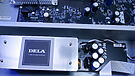
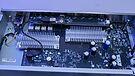
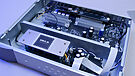
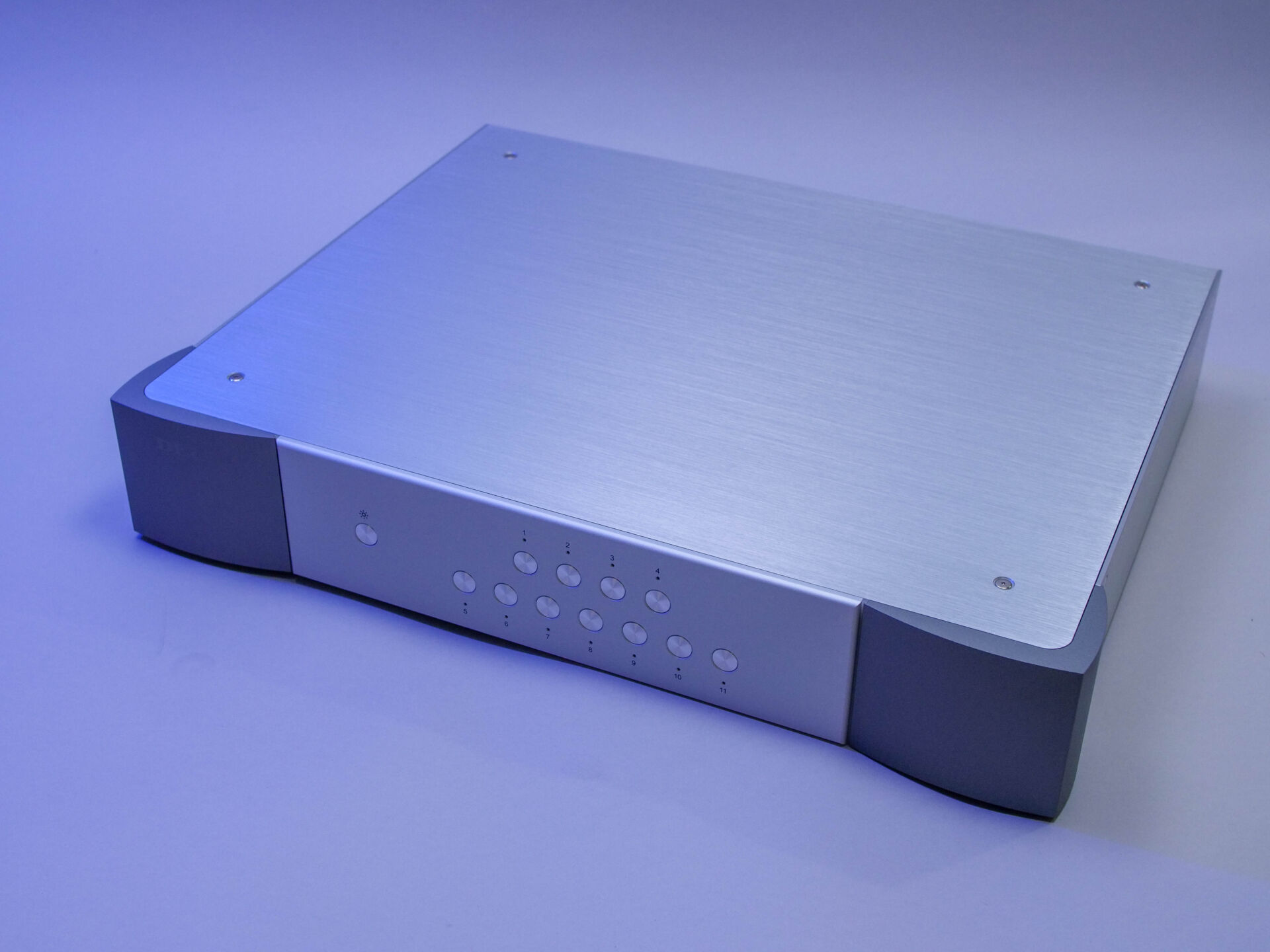
Let’s take a look at the DELA S5. This switch is right in between the DELA S50 – 3599 Euro and the S1 – 13999 Euro. With the S50 we see fewer ports – though SFP slots and RJ45 connectors – and of course a less fancy housing, power supply and less internal shielding. The S5 brings not only more connectivity, but also better internal shielding, a nicer power supply and a nicer housing with HS-CC which dampens resonances.
What many people would expect is a linear power supply. But DELA does not use that. We see a nice, solidly designed switching power supply. (DELA calls this power supply the Super Clear Dynamic Power Supply). And we do understand the choice of a switching model. Our experiences are also good with solid, switching power supplies in digital equipment.
When we look under the hood, we see quite obviously a proprietary design. The two chipsets are well cooled and the board layout is sleek. Melco / DELA still mentions the use of a nice clock. DELA will have integrated this neatly so no issues leak out. We will be measuring this switch later.
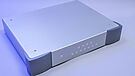
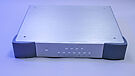
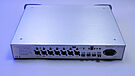
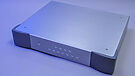
The case has a particularly nice finish (a bit sharp on the bottom edges, though). Up front we see twelve buttons: one for LEDs and eleven for port speed switching. For RJ45 (DELA uses fine, Neutrik connectors that can really lock) it is possible to switch between 1Gbit, 100Mbit and 10Mbit. The SFP slots are switchable between 10Gbit and 1Gbit. The color of the LED indicates the speed. Finally, at the back we see a usb connector: 5V, 0.9A. This one can only power something.
Jaap, I believe you also reviewed the Matrix SS-1 Pro. What comparison can you make with the Dela? Thank you.
Man… sucks to be poor… 🙁
Ojee, wat een recensie over de Dela s5.
Ik heb een Melco s100/2 met een externe voeding (Farad). Die brachten een enorme verbetering t.o.v. de standaard switch.
Na het lezen van dit artikel nu de vraag: biedt de Dela S5 nog meer dan mijn huidige combi en is dat het spaargeld waard.
Maar hartelijk dank voor de review.
Hermann Jaeger
Back in the dark ages I designed T1/T3 and remote bridges for a very large company. I was in the mix with 100M design and got asked in the 1M design which I opted out. Nibble (4 bit) half duplex seemed pretty stupid (1M Ethernet) to me coming from full Duplex 100M. Not surprised your hearing better results with 100M over 1M. But then again it also depends on files, location yada yada. As with anything audio, everything makes a difference. Sometimes good sometimes bad. Isolation though is a big deal for almost anything if done correctly.
This seems like an incredible amount of money to spend for a switch. Is there a less expensive product (products) that can produce similar improvements in sound?
From the first page:
“That a network has an audible impact does not immediately mean that you should spend 9000 Euros for a decent solution, but it does mean that it deserves attention.”
and: https://www.alpha-audio.net/review/a-very-deep-dive-into-network-switches-listening-and-measuring/
Very nice review. Thank you. I hope you all get to keep the switch.
Sure… We get to keep all the stuff we test… (I hope you get that was a joke).
Thank you for reviewing this sort of more expensive ethernet gear also!
Did you use the Jcat ethernet cable also the switch output side?
I ask since I have noticed that we can´t really hear the full effect when using really great switches/LAN isolators unit we use ethernet cables that is able to protect the low noise signal that they manage to output.
The lower the noise output we achieve, the better ethernet cables seems to be needed, to protect the even lower noise levels.
Is this something you agree on?
I have used my own double shielded lan-cable and other decent CAT6a cables. Nothing fancy. Yes: cables matter. So, use what suits you. I personally use high quality ‘stock’ CAT6a-cables.