





The Sound
Contents
Frankly, it’s a bit of a shock when we take the Sonnet out of the Yeti Reference and then plug it into a standard, solid-state socket, which is unfiltered. It all feels a bit raw, unsettled and flat. Anyway: we have to do anything for a fair, solid test, right?
QRT Qsine – 369 Euro
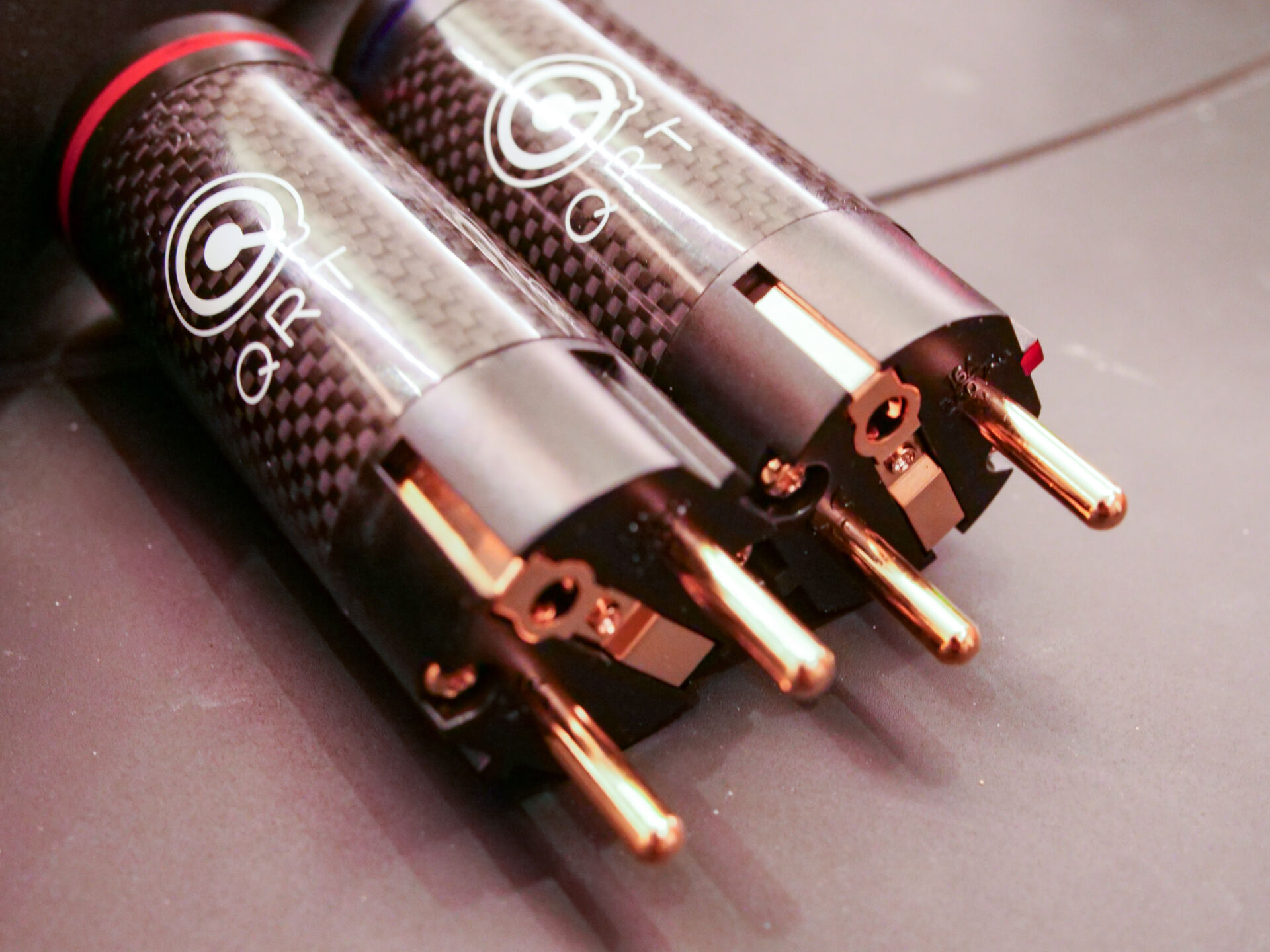
It is extraordinary what this ‘filter’ – actually it is not a filter – does. It is not so much that it is a world of difference immediately, but we do hear a sharpening of the focus and a slightly calmer overall sound. The midrange in particular becomes a little calmer and more pleasant, which in this case is, well: necessary. Of course, the power in our office building is anything but audiophile-friendly. So the Yeti we normally use, is a necessity rather than a luxury.
What is pleasant is that the Qsine thus puts the voices in front of you a little more steadily and a little more in focus. And it does so without hugely messing with timbre or placement. So, it brings a little more air and some sense of space. But it is more ‘in the musical image’, in stead of outside te speaker-area, if you know what we mean.
QRT Qwave – 519 Euro
This is quite a crazy plug if we are honest. The effect is less obvious than with the Qsine, which is easily reproducible (though it remains subtle). The coloration seems to get a little warmer and the image seems to grow a little. However, in our case this does come at the expense of the sharpness of focus. So it’s a bit of a “trade-off. Unlike the Qsine.
If we’re honest, we like the effect of the Qsine a bit more in our system. The Qwave does do something, but it doesn’t add that much in our case. We’re mainly looking to get a little more calmness and focus right now (something the Yeti Reference does directly, even though it costs a lot more). We’re not looking for warmth or scale. Of course, that does vary from system to system.
By the way, it is possible to combine with these QRTs; they don’t get in the way of each other. They can even work complementarily. Although, of course, the price rises seriously if you are going to put a few of these plugs in your system. The question then becomes: are there alternatives that can do more and keep the configuration simpler? We’ll leave that to you to determine.