




Measurements and conclusion
Contents
We also measured the PMC Prodigy1. Both response and impulse response, distortion, impedance, phase and a measurement at the terminal (type of response and phase at the filter). Acoustic measurements were made using the Illusonic IAP with an Audient ID14 microphone amplifier and DPA 4091 microphone. The measurements were made on the “dead” cinema side of the listening room.
Response and distortion
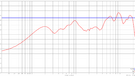
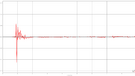
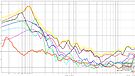
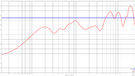
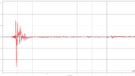
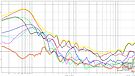
We measured at 1 meter distance with a window of 6ms for response and 15ms for distortion. So read the graph starting at about 200 Hz to get a realistic picture. For the distortion, forget about the peak at the beginning: it is not correct.
Impedance
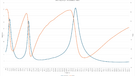
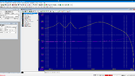
The impedance and “response” measured at the terminal (basically the response and electrical phase of the filter, measured at the terminals) of the speaker were measured with the Sourcetronic LCR and the Prism dScope III.
Interpretation
The PMC Prophecy1 measures nicely. We see a little “elevation” in the treble. Both on-axis and off-axis. This gives air and space in the imaging. We estimate that at the listening position it has mostly straightened out.
Distortion is low. We see a tipping point where the low goes below 1%; that’s around 400 Hz. We find that a touch on the late side given the price range. But this could also be the ATL design; after all, the bass is partly out of phase. We didn’t experience it as distortion in any case.
The midrange is unprecedentedly clean at 0.071% at 4000 Hz. That’s particularly impressive! Average between 1300 Hz and 15000 Hz is around 0.18%, which is just exceptionally clean. Great work by PMC!
Impedance is very favorable. The lowest we see is around 4.5 Ohms. That’s from 15 KHz on. Before that, the lowest is around 6 Ohms. In short: no awkward dips to consider.
The electrical phase is a different story. We do see some swings that touch + and – 45 degrees. So a stable amplifier is desirable, but a lot of watts are not necessarily necessary.


You advice to not use the Prophecy1 in too large a room; would you also caution against that when using a sub? Wouldn’t standmounters plus sub in general be able to fill a room with sound just as well as floorstanders without a sub?
Transmission line is all about timing coherency of the bass. I don’t think adding a sub works. That’s why there’s a line of floor standers as well.
Very interesting speaker for me and thank you for a great review!
This is a very specific use-case that you might not have tried… but let me ask anyway since its very important for my own use-case.
Does this one work in a near field setup, where I am only aprox 130cm from the speakers?
I ask since i have auditioned a few speakers on that distance and sometimes the soundstage doesn´t come together that close, i have noticed.
I can see that the distance between the tweeter and the midrange woofer is relatively big, which worries me a bit.
If that actually matters is only my own amateur guesses… 😀
Thanks again for great work for the audio community!
You might want to take a look at the Dynaudio LYD series : https://dynaudio.com/professional-audio/lyd
In case of near field speakers: the pro audio speakers made for this use case are unbeatable. Most of them are active. For good reasons: better control on the phase accuracy, which makes or breaks the soundstage, especially in near field use.
PMC, obviously, has a series of their own for near field use: https://pmc-speakers.com/studio/nearfield/
Thank you so much. Will have a closer look at active studio monitors then instead, and try to audition them.