



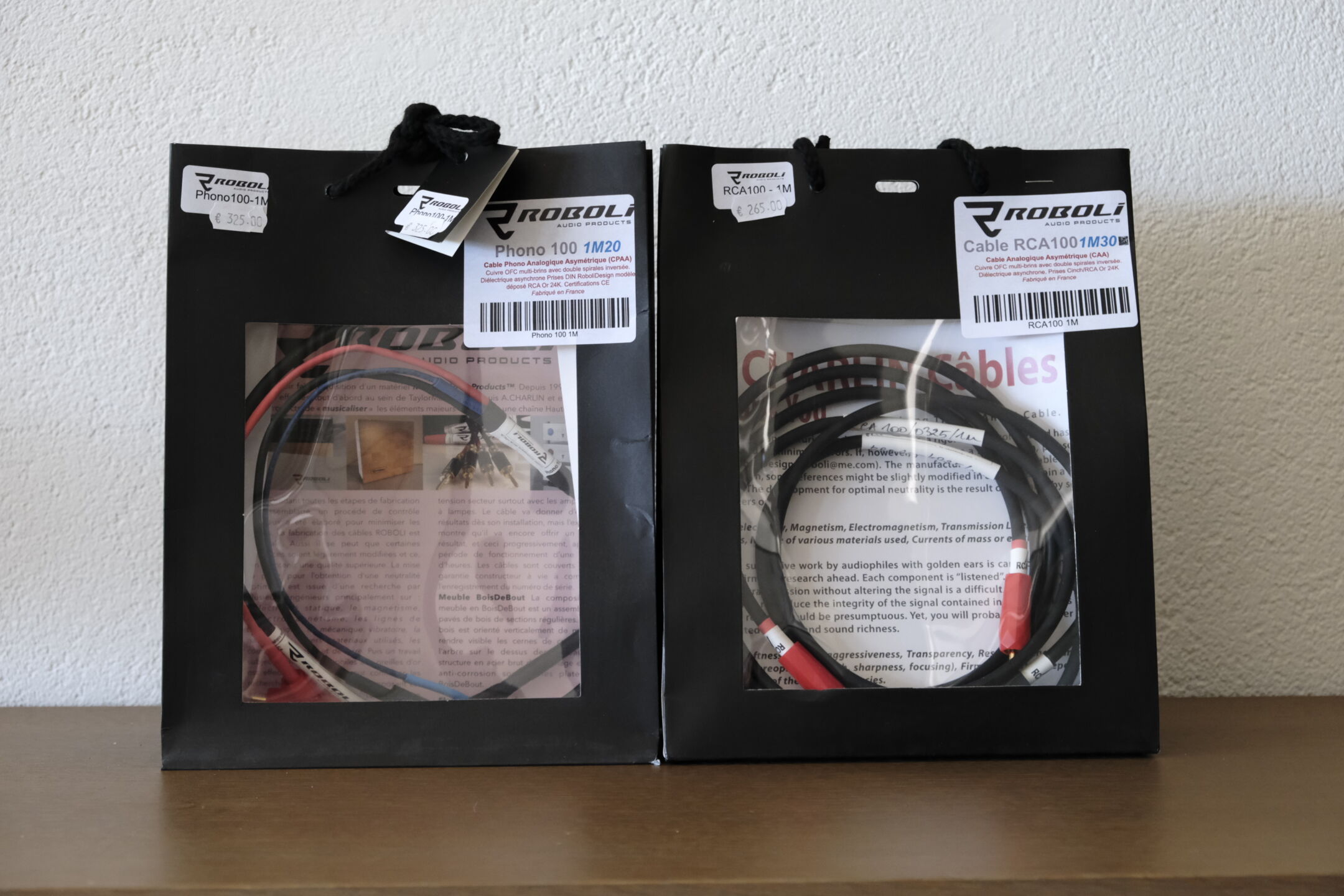
Listening to the Roboli Design RCA interconnect cable
Contents
David Sylvian’s “Let the Happiness In” strikes a subtle balance between the vocals, the dark sound of brass chords, the lightness of the string arrangement with piano, and a muted trumpet solo. The Roboli cable renders this track with clarity, precision in rhythm and timing. The various instruments blend seamlessly together; the focus is more on the overall presentation than on distinguishing individual instruments.
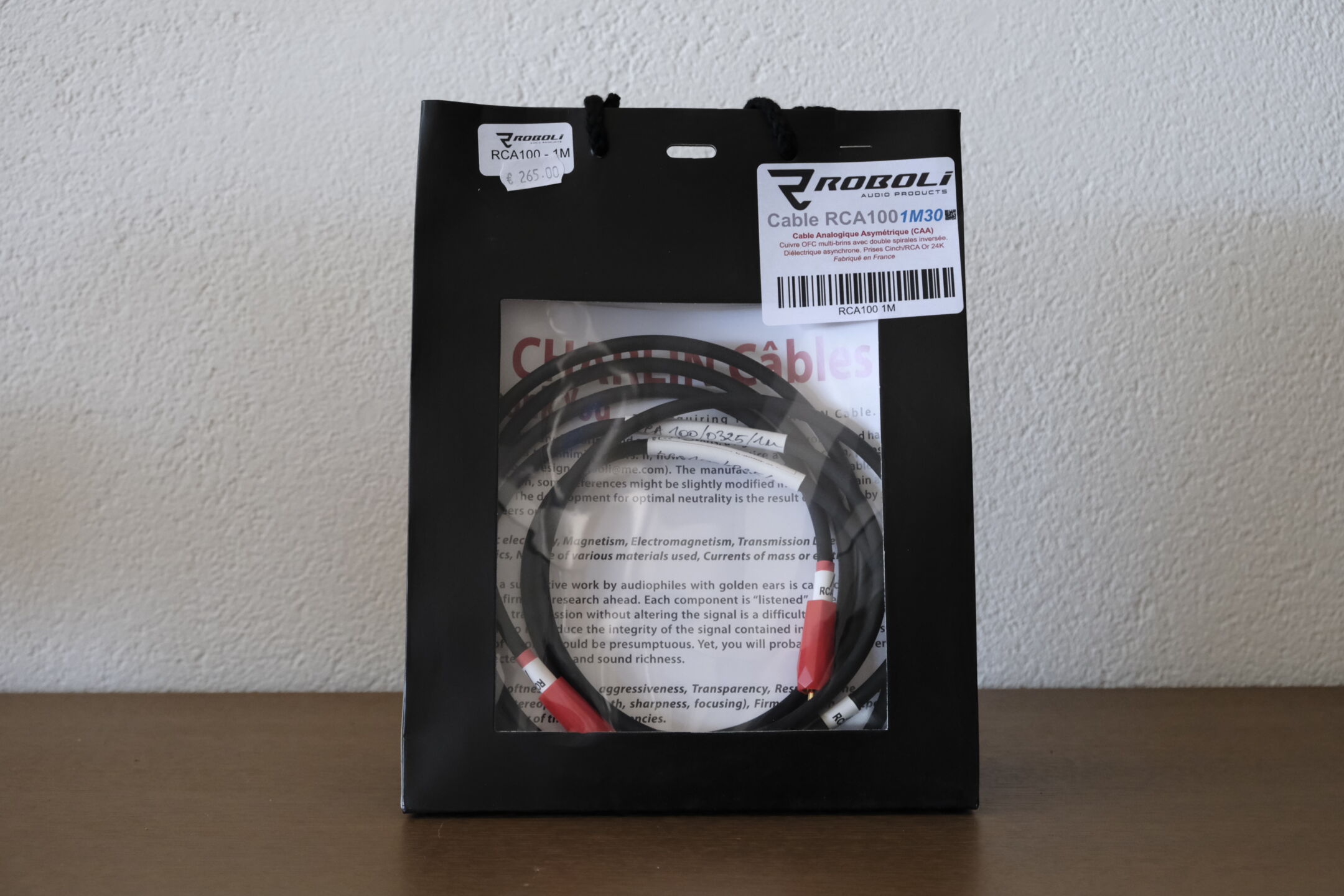
With the Sommer Epilogue, the soundstage is positioned slightly further back; the bass is less pronounced and blends in better, which you can hear in the decay of, for example, cymbals, which gain more layering as a result. It feels a little more spacious, with less emphasis on transparency. Above all, there is a greater sense of calmness in the sound. Details are emphasised more, and there is slightly greater separation between the different layers of instruments.
The track featuring electronic music and saxophone by Caterina Barbieri & Bendik Giske reveals a great deal in terms of tonal colour and the depth of the soundstage. The saxophone sounds very clear and the sound of the valves being closed with force is natural. The Roboli cable is extremely precise in its reproduction of that sound: the size of the sound source – the saxophone’s keys – can almost be physically pinpointed.
The deep bass synthesiser sounds remain distinct from the rest of the soundscape. The drawback of a speaker with a bass reflex port becomes audible; apparently, the frequency of the bass reflex port is emphasised slightly more with this cable. Results may therefore vary in your system.
With the Sommer Epilogue cable, the saxophone gains more body. It all sounds more relaxed; the Roboli cable is somewhat more forceful, but also more lively. Particularly in terms of the physical depth of the soundstage, the Sommer reveals a highly layered soundstage, whilst the Roboli projects more of a bubble of music.
Finally, the choral and orchestral work performed by the Collegium Gent. What a marvellous performance this is! With the Roboli cable, the choir is, strangely enough, positioned slightly above the orchestra, but the choir’s sounds blend beautifully with the orchestra and you really get a sense of the hall’s atmosphere. If you close your eyes, what your ears perceive is less like a living room and more like a concert hall. The emphasis is mainly on the melodic lines in the choir. With the Sommer cable, it all sounds a bit more distant. The choir and orchestra blend less beautifully and the choir sounds less fluid.
Conclusion: Roboli RCA
There are clearly audible differences between the Roboli RCA and the Sommer Epilogue, which I use as a reference, but these differences are smaller than the text might suggest. I am happy with both cables for simply enjoying the music without getting too caught up in what I’m hearing. Both do justice to the qualities of the Kora TB200: a dynamic, expansive soundstage.
For the track by Caterina Barbieri & Bendik Giske, I prefer the Sommer Epilogue. For the Dvořák recording, the Roboli Design cable is preferable. With the David Sylvian track, it makes no difference.