



Punch Audio Portazo: A Bass Powerhouse?
Contents
OK, here we go. We select the most bass-heavy tracks from our collection to experience how low these Portazos can go. Of course, I could have mentioned Kendrick Lamar’s “Humble” here, or a heavy EDM track like “The Dragonhawks” by Liquid Stranger & Space Jesus. We played these for a while, but I get much more information about the performance of, in this case, an in-ear monitor when I play music that I am more familiar with.


For example, bassist Ben Williams, the opening track “Black Villain Music” from the album “Coming Of Age”. It starts with a Fender Rhodes, then the double bass comes in, followed by the rest of the band. This track contains a lot of what I call “undertones”: different layers of bass reproduction. The Rhodes piano, for example, should have a deep low end that forms the foundation for the rest of the vibraphone-like sound. The double bass is very difficult to amplify and record properly. Often it sounds too woolly in the low end and too thin in the high end. In short, in this song we can appreciate the bass qualities much more subtly.
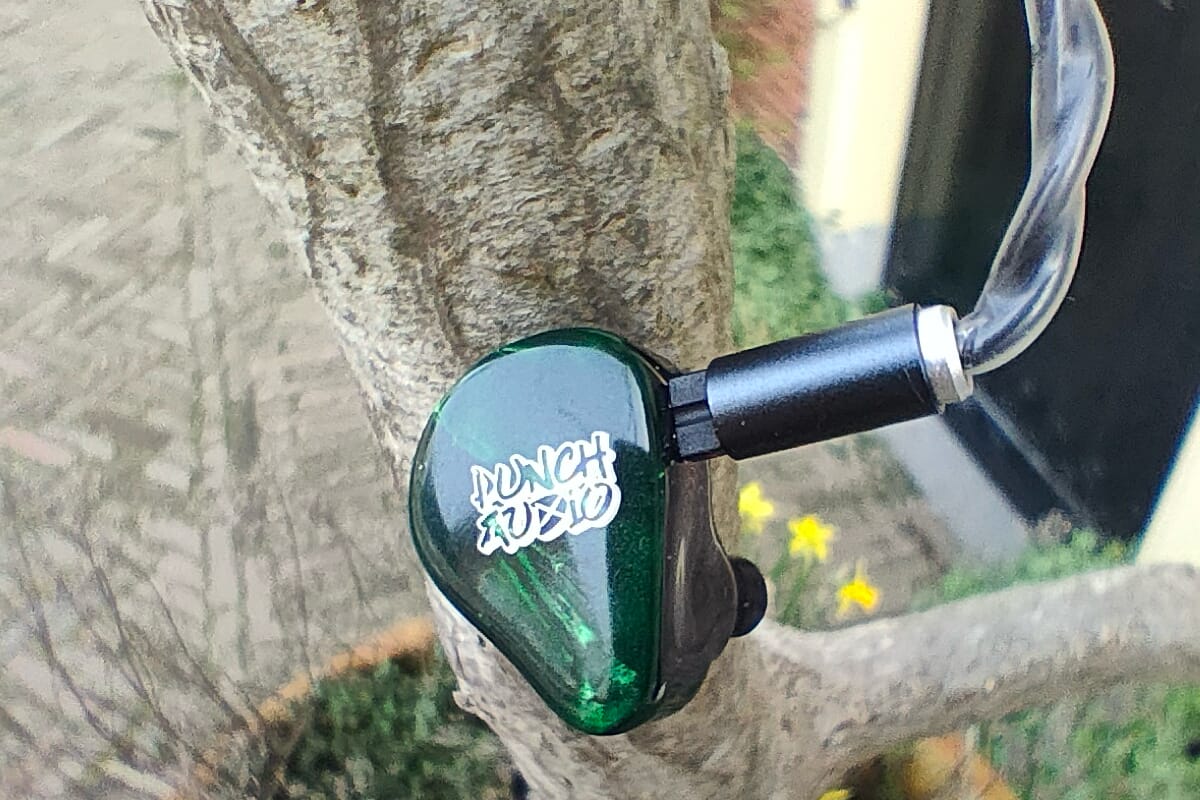
We would not really call the Punch Audio Portazo a bass powerhouse. The lower registers are reproduced just as we hear them on neutral headphones and in-ears. Not overpowering, in the right proportions. The high frequencies are fast and accurate, as we expect from planars. We don’t hear any excessive high frequencies here either.
Let’s stay with jazz for a moment, with Roy Hargrove. We play “Strasbourg St Denis” with another prominent double bass, a grand piano and Hargrove’s trumpet. Here we notice again how decisive the eartips are and the position in which they are placed in the ear. We notice that turning them in too deeply leads to a closed-in feeling and bass reproduction that is far too heavy. Turning them back a little helps enormously. It is a bit like a test in speaker placement, but in the ear canal.
Of course, “Giorgio by Moroder” by Daft Punk is a must. It is a great track for testing the durability of the sound at high complexity. And at the end of the track, the Moog synthesiser goes down to the very lowest; 0.1 Hz, far beyond the human audible limit of 20 Hz. The Portazos keep it up for quite a long time.
Midrange
For the midrange, we turn to Jennifer Warnes’ “The Well”. This album was recorded by Bernie Grundman and mastered by George Massenburg, two giants in the studio world. Warnes’ voice is recorded very close up, so we hear everything: breathing, the rhythmic beats of the band, a balanced piano recording.
The midrange is slightly less prominent than the low and high frequencies in the Punch Audio Portazo, but we do not find this (quite) bothersome. Strings and woodwinds benefit from this in particular, which we also notice when playing classical music. Zelenka’s Trio Sonatas, played by a sextet including oboist Heinz Holliger. The texture of the oboe comes through beautifully and the bassoon (which can go very low) does not dominate. The ensemble sounds wonderfully homogeneous and swinging.
Mooi dat jullie regelmatig IEMs testen. Om een serieus goede IEM te kopen ben ik vorig jaar een aantal modellen gaan luisteren, en het is de Campfire Audio Astrolith geworden. Uitgerust met plane drivers en ruim boven de 2000 euro, maar wat een gebalanceerde sound! Dit moet je echt een keer beluisterd hebben. De Astrolith heeft een wat V shape geluidsbeeld (het mid is iets meer teruggetrokken) goed ruim in de bas en een prachtig hoog. In combinatie met een goede DAP natuurlijk en high res audiofiles, een belevenis.
De FiiO FX17 heb ik ook beluisterd en deze is ook (heel!) erg goed. Toch de Astrolith vond ik fijner om langere tijd in te hebben, draagt prettiger en lichter.
Ik heb enkele ChiFi IEMs beluisterd en getest (merken als KZ), deze waren ruim onder de 100 euro, en niet slecht presterend maar in vergelijking met de toppers van FiiO en Campfire ga je met de ChiFi terug naar Mp3, terwijl ik echt naar Wav luisterde: het geluid wordt platter, je levert in op dynamiek en maakt mij luistermoe binnen 15 minuten. Verder prima IEMs voor podcasts en Youtube filmpjes maar voor muziek schiet het tekort. High End is het echt niet.
Since this is the English section of our platform, I will translate your comment: “It’s great that you regularly test IEMs. To buy a seriously good IEM, I listened to a number of models last year, and I ended up choosing the Campfire Audio Astrolith. Equipped with plane drivers and costing well over £2,000, but what a balanced sound! You really have to listen to this at least once. The Astrolith has a somewhat V-shaped sound (the midrange is slightly more recessed), good bass and beautiful highs. Combined with a good DAP and high-resolution audio files, it’s an experience.
I also listened to the FiiO FX17, which is also (very!) good. Still, I found the Astrolith more comfortable to wear for longer periods of time, as it is lighter and more comfortable to wear.
I listened to and tested a few ChiFi IEMs (brands such as KZ), which were well under £100 and didn’t perform badly, but compared to the top models from FiiO and Campfire, the ChiFi takes you back to MP3, whereas I was really listening to WAV: the sound becomes flatter, you lose dynamics and it makes me tired of listening within 15 minutes. Otherwise, they are fine IEMs for podcasts and YouTube videos, but they fall short for music. They are definitely not high-end.”
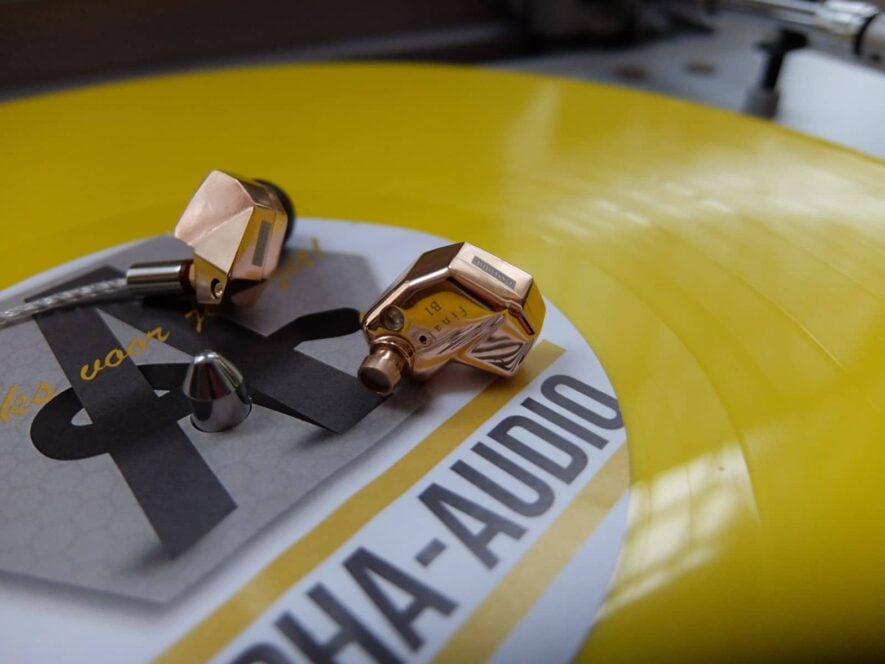
I have listened to a number of top models from 64Audio, Campfire and, previously, electrostatic versions from Stax. On stage, I use in-ear monitors from Shure and am perfectly satisfied with some KZ IEM’s. A while ago, I review final B1 and B2. Very interesting IEM’s as well: https://www.alpha-audio.net/review/review-final-audio-b1-and-b3-in-ear-headphones/
These premium brands have MMCX connectors. Chi-fi is, imho, making swift progress in enhancing the sonic achievements of IEM’s. The pricing is rising, but still at affordable levels. I tested Kiwi Ears Orchestra II with 10 BA-drivers, at a price point of 349 EUR. I didn’t do an AB comparison but it approaches the much pricier IEM’s of afore mentioned brands. Also the quality of the cables and connectors is improving. I definitely would qualify this one as high end.