




Listening
Contents
Plenty of features on these NC20s, but how do they sound? We’ve used these in-ear headphones a lot over the past few weeks: cycling, walking, on the train, in the car. Pairing is quick and easy, and the connection remains stable, even in busy stations.
DSP
The sound is full, rich and bass-heavy, but if there’s too much bass for our liking, we can adjust this using an EQ setting. Great for on the go. And also great for use at home. When trying to describe the sound, we find it rather difficult to put into words. This model really highlights just how dominant the influence of DSP (digital sound processing) is. When done well, it allows an audio device to transform into almost any desired form. For example: in the studio, we have a couple of microphones that allow the recording engineer to change the microphone’s characteristics after the recording. A vintage valve microphone? Click. Or perhaps an AKG 414, matched pair, ARD 1974 edition? Click. This is called digital morphing and it works astonishingly well. Of course, the microphone must be capable of recording the music in such a way that it can be modified afterwards. With systems of this kind, the art lies in the collaboration between the microphone and the software.


A speaker/driver is essentially a microphone, but the signal travels in the opposite direction: from the diaphragm to the listener. In classic hi-fi, it is the electronics and the mechanical design that determine the quality of the reproduction. Over the past 20 years, DSP has developed into a key component in music reproduction. There’s a good chance your car radio is equipped with a DSP engine. That thumping bass in the Tesla? If a conventional speaker were to reproduce this, it would require a driver of at least 12 inches. With smart DSP, the same effect can be achieved using a small speaker. The pumping bass from the small Sonos and other network speakers can also only be made possible by DSP.
With the TOZO NC20, it’s a lot more subtle, and that’s what makes it so difficult to assess. Because what are we actually listening to? An algorithm? A driver? We notice it most with the adaptive ANC. What we hear is constantly adjusted to the ambient noise – volume, emphasis on certain frequencies. It happens almost imperceptibly, which is quite an achievement. The NC20 has no fewer than 6 microphones (!) to pick up sound from all around. So it sounds exactly as you want it to!
Surround
New to this model is the surround mode for films, and it really does work quite well! There’s more of a 3D quality to the sound, and the effects are more clearly audible. We’ve mentioned it before: TOZO has really got the hang of implementing DSP.
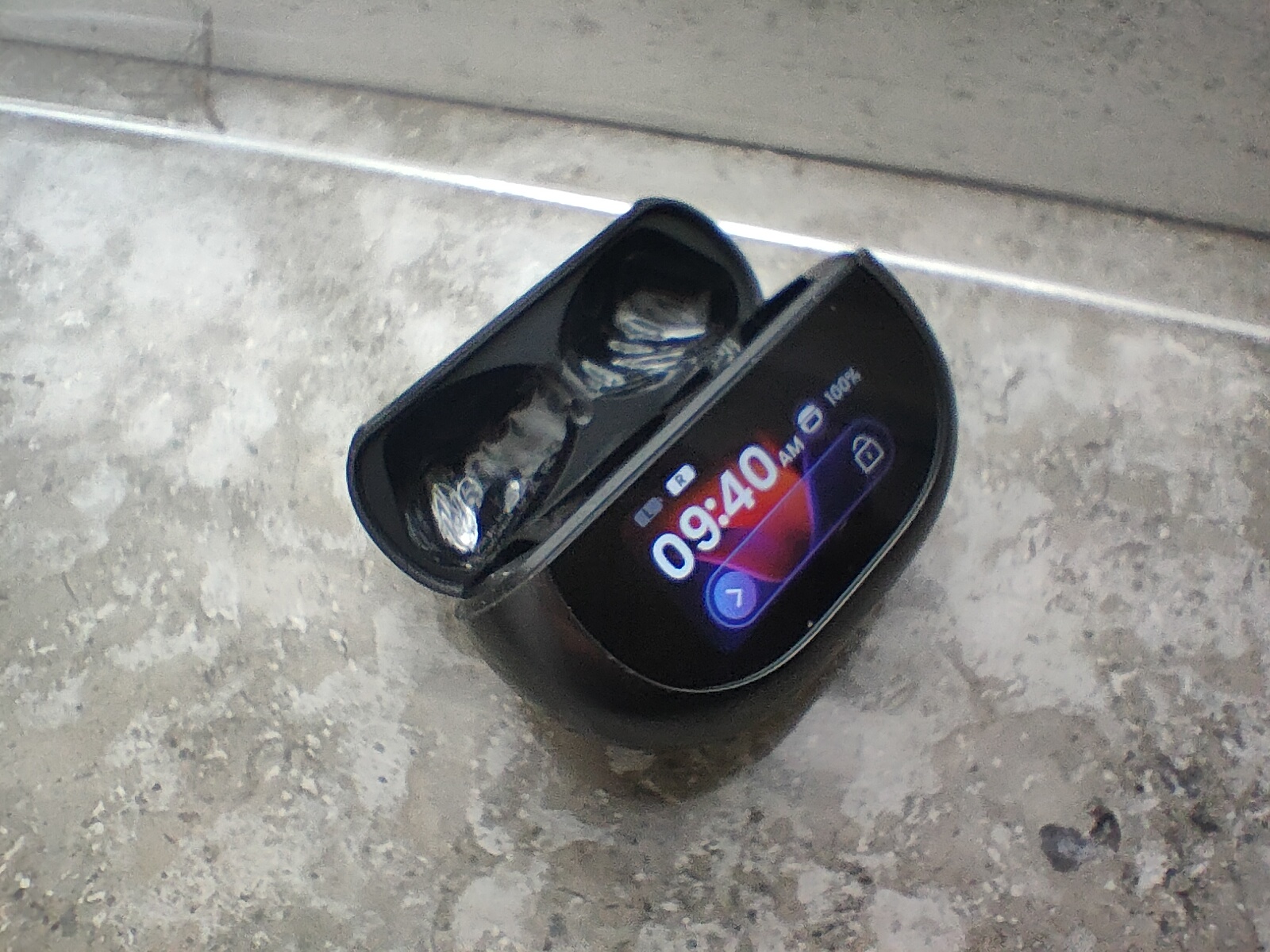
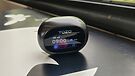
And we’ll say it again: having a dedicated remote control in the form of the touchscreen on the cradle really does add something to the listening experience. We didn’t use the TOZO app during the test period. It’s also much easier to take the unit out and operate it than to open an app (a music player or the TOZO app) on your phone.