




Luisteren
Contents
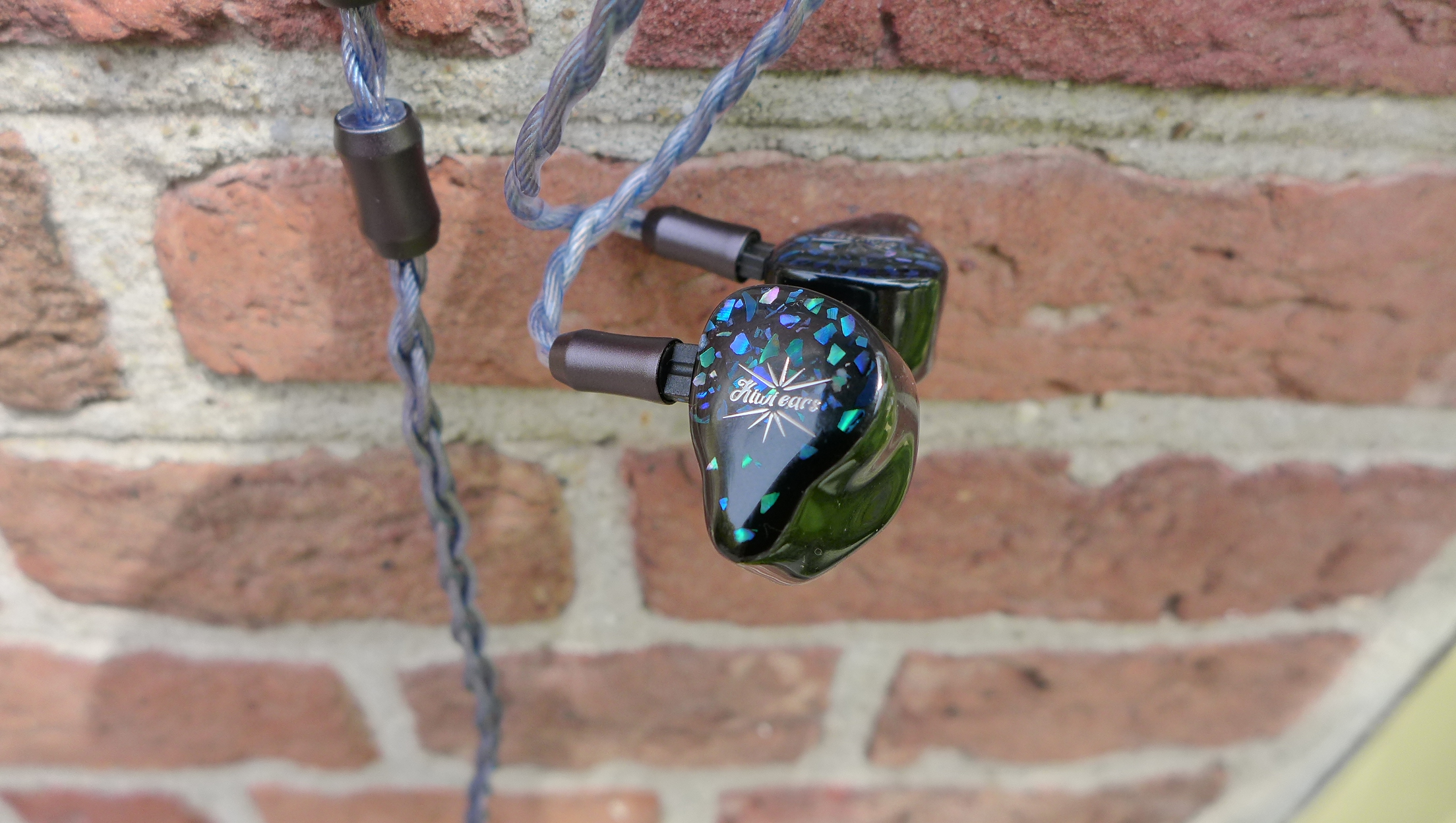
First of all, we would like to mention that the in-ears are comfortable to wear. Despite their size, they fit comfortably and after a while we don’t feel them. The cable is not very sensitive to contact, probably due to its mass, and is flexible in use.


Our overall impression is that the Astrals reproduce music very faithfully. The excellent midrange of the Kiwiears Airoso was already noticeable, and the Astrals take this a step further (in the right direction). We play Each And Every One by Everything But The Girl, the first track on their debut album Eden. The original version, the 2012 remix, has erased all the subtleties of the original. We play two versions: from the NAS and from Qobuz, played on Audirvāna. The local version draws us more into the music. The detail, timing and spatial imaging are slightly better on the NAS than on the streaming version. What is striking is that we hear and feel the sub-bass. We need to listen to that more closely.
Bas
An overly generous reproduction of the lower registers can overwhelm the rest of the music. This is a subtle balancing act because a good reproduction of (sub)bass can actually create space for an airy, uncomplicated and precise soundstage. The midrange and higher frequencies are, as it were, relieved and can therefore do their job better. So let’s try some complex passages: how does it hold up? My colleague Martijn has a listening tip: Peter Gabriel’s I/O album, which features two masters of the tracks. “The Dark Side” in particular is mixed to the max. An audio system with low resolution is immediately exposed after playing I/O. It becomes a jumble of sound. It is impressive how engineer Tchad Blake has elevated compression to a new art form. The waveform of the track looks like the familiar “sausage”, yet the music remains intact. We hear all this on the Astrals. There is bass and there is sub-bass, but Peter Gabriel’s voice is what we hear, between all the lines in the music.
When playing bass-heavy tracks such as Detroit by Marcus Miller or Harlem by Ibrahim Maalouf, we also experience a lot of bass, “not annoyingly subwoofer-like”, according to our notes. It does not suppress the midrange. With Love Rears Its Ugly Head by Living Colour, we are treated to a wonderfully dry kick drum and a beautiful layering between drums, bass, guitar and vocals.
Midrange

In a word: sublime. The quality of the midrange reproduction is clearly audible in vocal music. We listen to a variety of pieces: Os justi, composed by Bruckner and sung sublimely by Voces8. Or The Singers Unlimited, the close harmony group that only made multitrack recordings in the studio and never performed live. And The Carpenters. Karen Carpenter’s smooth alto and Richard Carpenter’s vocal arrangements sound saccharine, but oh so beautiful and compelling. Or Livingston Taylor (James’ brother) on the album INK! The Astral in-ears allow you to hear the differences in voices very clearly. The texture of the voice and the different melody lines in polyphonic pieces are very clear. Sometimes we even heard new details in well-known tracks.
Hoog
Jacques Loussier. Not the well-known Little Fugue in G, but Bach’s Minuet in G from Anna Magdalena Bach’s Notenbüchlein, on the album Reflections of Bach. The percussion is recorded very subtly here, which is particularly noticeable in the brass section: the cymbals and the hi-hat. The different timbres are clearly audible. And on Heart Of Ice, the closing track of Joe Jackson’s album Body And Soul, we hear the hi-hat continuously as the song becomes fuller and fuller. Here too, the Astrals allow the somewhat rich timbre of the hi-hat to be heard clearly and the hi-hat continues to float audibly, even when things get busier. Ghost notes from the drums are clearly audible, and the spaciousness is striking in all the music played. We hear the reverb beautifully in various recordings. The Astrals don’t make it bigger than it is, it just sounds right.
Kan het beter?
The only thing we find improvable about these in-ears is the crossover from bass to midrange. That’s why we were curious about the technical construction of the Astral; how is the “cooperation” between the conventional driver and the six BA drivers implemented? Hopefully Kiwi Ears will clarify this for us at some point. We currently miss a smooth transition from the conventional to the BA driver. This could be better; slightly better, but still.