




Intro
Contents
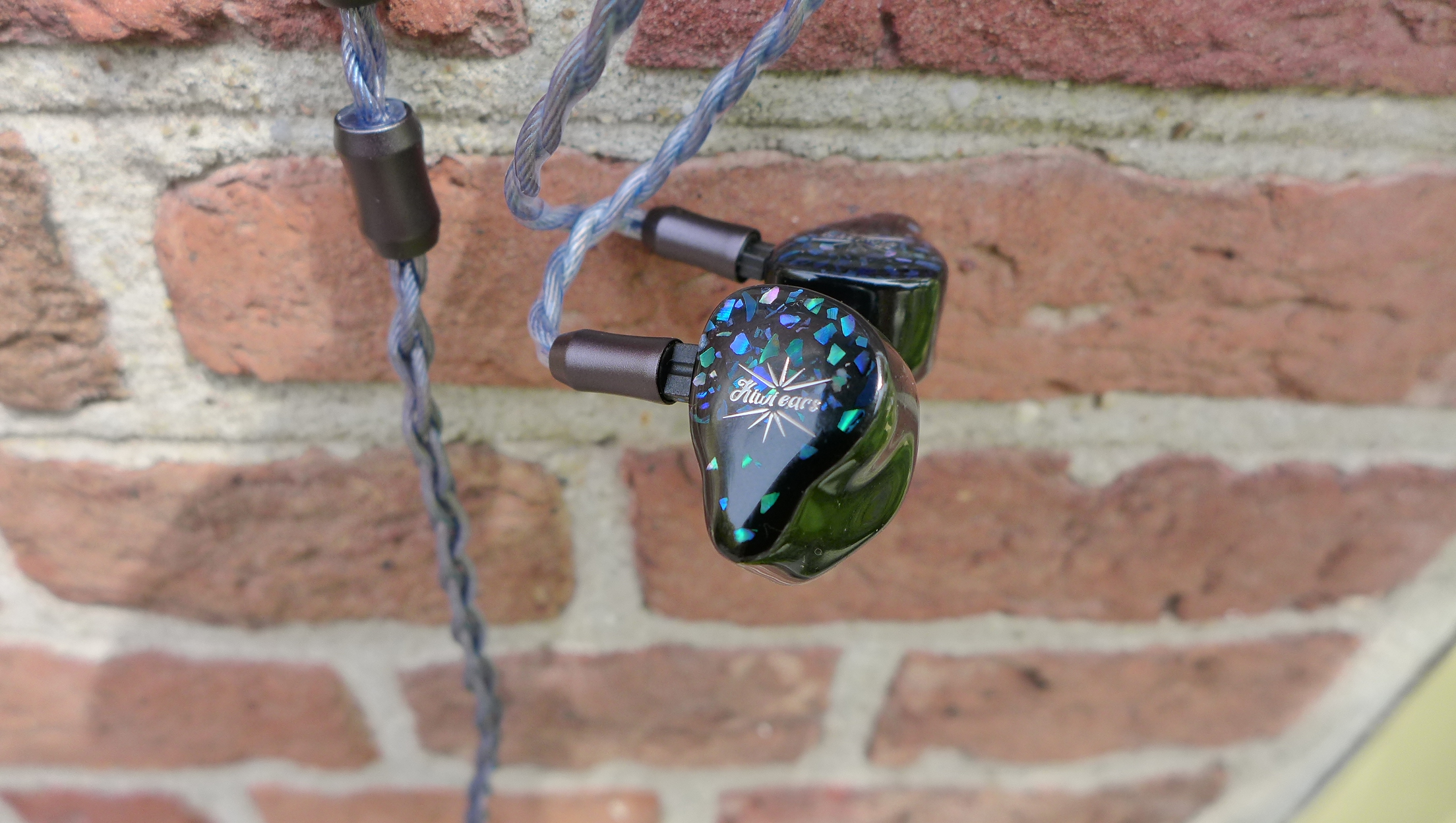
In May this year, we were introduced to Kiwi Ears’ in-ear monitors (IEMs) for the first time. We were pleasantly surprised by the Airoso! This time, we tested the Astral, a hybrid model with six balanced armature drivers and one dynamic driver. Compared to the previously tested Airoso, Astral is more than twice the price. Let’s check out if it’s worth the extra money.
Kiwi Ears has a large collection of IEMs, divided into the categories Balanced Armature (BA), Dynamic Driver and Hybrid. The top model in the BA series is the Orchestra (£450). The Astral is currently the top model of the IEMs with a hybrid construction.
BA – Balanced Amature
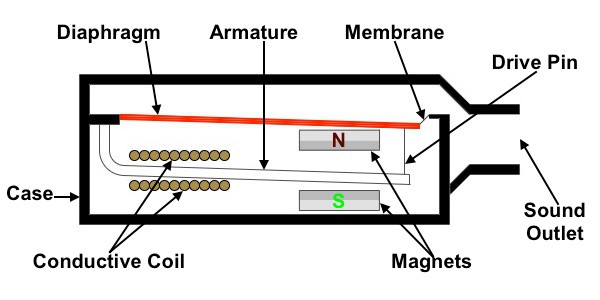
Balanced armature technology is a variant of magnetostatic conversion of electronic signals into sound waves. An armature (a type of metal rod) is placed in a magnetic field (it balances) and an electrical signal is sent to the armature, which is then transmitted to a membrane to form a sound wave. In this type of driver, all this takes place in tiny yet robust housings, with each armature serving a different frequency range. Top-of-the-range BA IEMs sometimes have as many as 16 BA drivers. In general, BA drivers are better at reproducing the midrange and low frequencies. More drivers can achieve a fuller bass response, but that comes at a price. The models mentioned with 12 or more drivers cost around £1,000-3,000. That is why, as with this Astral, it may be a design choice to use conventional drivers for the low and subsonic frequencies.
Knowles and Sonion
As you can probably imagine, this is complex technology. That is why there are only two companies worldwide that serve roughly 90% of IEM brands: Knowles and Sonion. There are other players, but these two have been the biggest for years. As far as we can tell, Kiwi Ears uses Sonion BA drivers in its products. And as with all audio components (such as DAC chips), how good it ultimately sounds depends entirely on the implementation.
Astral

The in-ears are delivered in a compact box. Inside, we see the same type of storage case as the Airoso, with slightly different dimensions. It contains the two earpieces, a headphone cable, three sets of silicone eartips, and spare grilles (because these get dirty over time due to, well, you know, the inner ear and stuff, let’s not go there). The Astrals can be listened to in a balanced setup with a so-called Pentaconn 4,5mm jack. This is a headphone jack that is between a 6.35 and 3.5 mm connector in size. Kiwi ears supplies a 3.5 mm stereo connector and a Pentaconn. These can be attached to the headphone cable, so you only need one cable. The cable is a braided type, 4-core, with a thickness that feels robust. Compared to the Kiwiears Airoso, the cable is twice as thick and heavy.
As mentioned earlier, a conventional 10 mm driver, tuned to 300 Hz, provides the bass. The six BA drivers are tuned for the midrange and treble. Unfortunately, we can find little information from the manufacturer about the technology of the BA drivers, and questions to Kiwi ears about the technology used (filtering, cables, drivers) remain unanswered.
Eartips
In a previous review of IEMs, we already mentioned the importance of good earplugs or tips. The included eartips did not fit us very well. The personal audio specialist Ears Unlimited kindly provided us with the “Campfire ‘Curated Eartip Selection”. A collection of eartips, like opening a box of fine teas. It even came with a cleaning brush. We quickly found a good fit and the difference is enormous. If the tips fit well, the listener can achieve the desired sound image with minor adjustments (turning them in more or less, adjusting the direction, etc.). The bass punch, the degree of sealing and the direction are particularly decisive for the sound. Provided you choose the right eartips.