




Listening and comparing
Contents
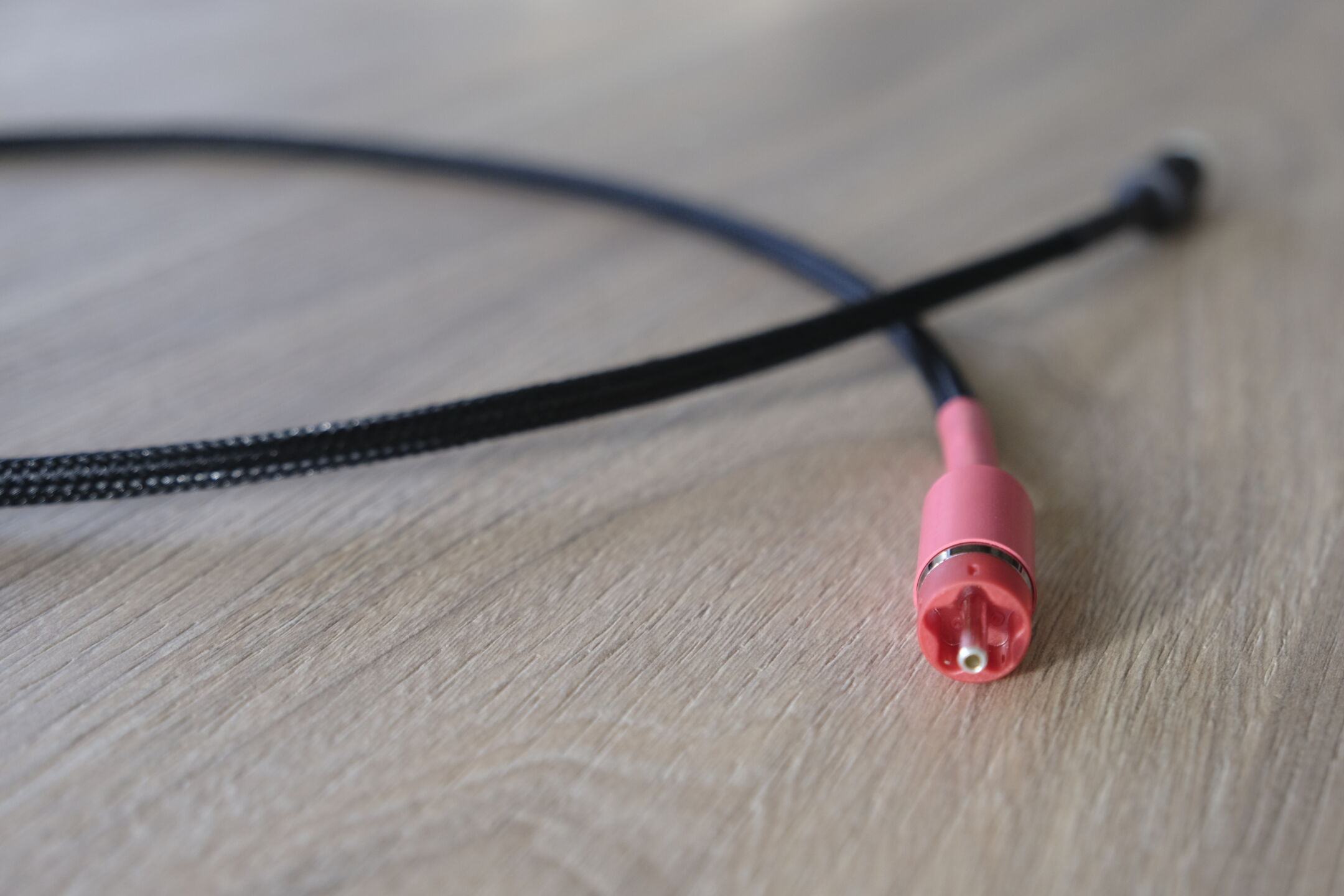
This new Art Speak SPDIF cable does not disappoint. The playback has a pleasant calmness that is not there with the Forrest and older Art Speak cable. This is both when playing CDs and streaming.
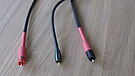
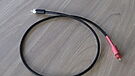
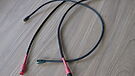
The Art Speak gives the music a nice focus in the middle, something the older cable also has as a feature. With the new Art Speak, the sound is almost positioned in 3D, emanating from the centre. The nice layering in the depth of the soundstage stands out when playing Talk Talk. At the same time, the Art Speak is very clear in the placement of instruments in the soundstage, you can effortlessly point them out side by side and behind each other.
The differences in sound
The Forrest is the benchmark for comparison in sound. The old Art Speak SPDIF cable loses out on this against the Forrest. Only the new Art Speak and the Forrest are compared.
The sound is a bit drier in tone with the Art Speak, the Forrest makes the music sound a bit warmer. The reverb is audibly longer with the Art Speak, so it is not dry in that sense. Especially in cymbals, it is clearly audible. In ‘Rhizome’, the Art Speak produces a drier, but also much richer brass sound in the percussion, with a lot of layering in the sound. When the Audioquest Forrest is put back, it sounds more like a tin drum kit in comparison, while the Forrest is not bad, quite the contrary. You would be unable to pick this up if you did not listen to the cables back to back, on the same set.
In comparison, the Forrest is a bit grittier. It is just all a bit less than with the Art Speak, which is more refined. The Art Speak does sound a bit more poignant in the mids and highs. The Forrest is a bit more rounded and sounds more pointed in the attack of drums, for example.
Of course, a cable does not produce sound, it is all about the contribution it has to the end result.
Like water
The big surprise is the smoothness that the new Art Speak SPDIF cable brings. In Hania Rani’s track, more detail is audible, but above all a clear connection between notes. It sounds smoother, much less staccato than the Forrest.
In the comparison between Forrest and Art Speak, using the Beethoven recording, Steely Dan and the Tindersticks, the sound of instruments is more natural. It all does not sound so ‘HiFi’ and therefore more natural. It is very reminiscent of Yamaha’s signature sound: very correct, meaning with little colouration, and neutral, meaning with the right tonality of instruments. I read the words ‘balanced’ in my notes every time.
The effect of this cable is that the music is produced transparently and effortlessly.
This also has a downside: Peter Gabriel’s “i/o” cannot be swallowed with the Art Speak. You get too much of everything pushed into your ears. The Forrest ‘tames’ the sound just enough to be listenable. The Art Speak simply shows that we are confronted with this album’s boosted mastering.
The earworm
Describing ‘objectively’ what a cable brings and what the differences are in a comparison has one flaw. It cannot convey to the reader what it does to you as a listener. That is a personal experience, of course, but essential in describing the value of this cable. Objectively, the differences are small, but audible. The big difference is in the experience of music.
The music has more cohesion, the notes between instruments melting together more, while at the same time the background is quieter so you perceive more detail. This is quite a contradiction, because usually a quieter background leads to more perceivable detail and more detail to more disintegration of the music. Less feeling, more analytical.
Not so here. This Art Speak SPDIF cable lets the music speak. I cannot stop listening. Not to hear what the differences are, or that I hear a ting or a tang sounds different. The earworm is that the music feels organic and therefore the meaning of the music presents itself more clearly, making the feeling the music evokes stronger. That is the big difference.
Practical information
The quoted price of €219.50 is per metre.
You will not find Art Speak in shops, nor is there a website. For more information, email in**@******ak.nl.
Good day,
I must admit that I am surprised by the price of this DIY S/PDIF cable, especially considering that it uses RCA connectors that are commonly available, for example from AliExpress. Naturally, I would also be interested in seeing your measurements, which I find missing here, although I understand that you may choose not to publish them.
I would also like to know what type of coaxial cable is used inside. I assume it is most likely a standard, commonly available 75-ohm industrial coaxial cable.
For context, I have ordered the Mutec PSC 75-ohm cable based on your review, which is why I am particularly interested in how this DIY coax compares to it. The Mutec PSC 75 is known for its controlled impedance, high-quality shielding, and overall signal integrity, so I would appreciate your perspective on how the internal coax used in this cable stands up in direct comparison.
Not listened to those cables side by side, so no perspective available to be given.
Good afternoon,
I understand and respect that. What I do not understand, however, is that you test high-quality cables such as MUTEC or brands like AudioQuest, supporting your evaluations with various measurements, and at the same time present a cable of evidently poor quality, with connectors sourced from AliExpress, where it is unclear what components are used internally or how the cable is technically constructed.Of course, this is your decision and your right. I also understand that you are not obliged to provide any explanation. Nevertheless, in my view, this approach does not appear very credible and does not cast a positive light on this type of review.
Have you heard it?
No, I won’t hear it either. I have the FOREST and MUTEC cables – the MUTEC sounds very similar to the USB Supra Lorad. The FOREST has more pronounced yet at the same time rounder highs, and I use it in connection with a CD player. I use the MUTEC with a streamer together with USB, and depending on the sampling frequency I choose SPDIF or USB. Every system is unique and the changes are subtle. It is not about “hearing every cable,” but I am pointing out your style of reviewing, where in one case you present measurements and in another you recommend a cable that is, in essence, completely ordinary, yet sold at an inflated price. I do not consider this to be a fair approach.hain feeds into a Denafrips Pontus 15th DAC.
I have to say that I like their reviewing style, also for these types of shorter articles and quick-takes, since they can´t be expected to measure and compare everything, as that would severely impact the number of articles they are able to put out. I rather hear their subjective experience on a single cable than nothing at all on that cable.
As i see it, they have earned my trust by publishing all the measurements, live recordings, technical deep dives and explanations. They go the extra mile that no other publication has ever gone, to try to explain why these things matter. They are also a bit skeptical, which i think is healthy.
In my book they have therefore earned my trust also when they simply use their ears. At least more so than anyone else, that hasn´t gone the extra mile.
https://www.alpha-audio.net/whos-alpha-audio/
If Alpha Audio declares an effort to identify correlations between measurements and listening, and emphasizes transparency, then a minimum set of technical data should be a given especially when it comes to cables. Without such data, it is not possible to assess whether a product is the result of a deliberate engineering design or merely a randomly well-performing sample.
In such a case, the comparison does not come across as an independent review, but rather as a selective presentation of results without the possibility of deeper verification. This stands in contradiction to what Alpha Audio itself declares as its core values
Since we don’t have enough paying customers, the level of what we can achieve with the resources in terms of time, people and money is what it is.
Criticism is free, but so is our content.
Thank you for your explanation, which I understand. Criticism is free, but sometimes it is like holding up a mirror. I have seen many reviews and I like them, but please also understand my perspective, as I make purchasing decisions based on reviews that strongly influence me. Such is the world of the consumer.
I wish you a Merry Christmas and a successful New Year without criticism.
Cheers Martijn, will check it out. 🙂
Cannot be bought from a store or webshop? Is it a prototype ?
No. Ordering is only through the mentioned e-mail address. It is a legit manufacturer. We’ve testen a lot of his creations over time and visited him. Just use the search function on ‘Art Speak’.