




Intro
Contents
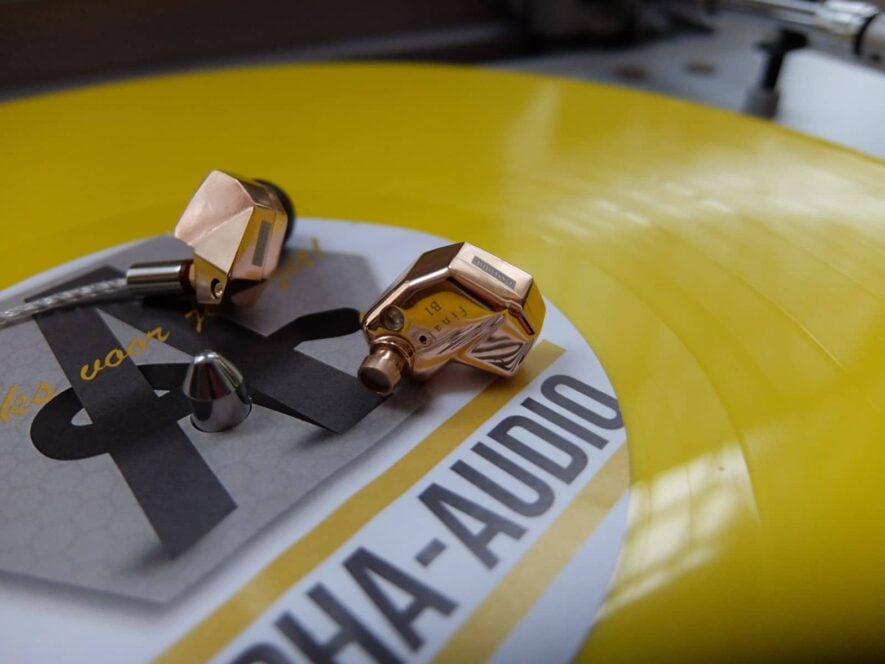
On 30 April, the world premiere of the Kiwi Ears Halcyon in-ear monitor took place. Unusually for an established brand, this was unveiled on the crowdfunding platform Kickstarter. We had the chance to test them and are sharing our experiences. We are very curious, as this is one of the first IEMs to feature MEMS technology.
MEMS?
Micro-electromechanical systems were first described in a scientific paper from 1986. It fits in with the trend towards the miniaturisation of electronic components. MEMS technology operates at the micrometre level; 1/1000 of a millimetre is the unit of measurement. MEMS technology is now widely used in the microphones of our mobile phones, among other applications outside the audio world.



When recording music, sound waves are converted into an electrical signal (recording). Microphones use a passive diaphragm for this purpose; a material that is set into vibration by the sound. Studio microphones are often designed as condenser microphones; a diaphragm is placed under an electrical voltage, making it more sensitive to vibrations (incoming sound signals). Something similar applies to audio playback; the speakers that have been around for over 100 years, featuring a voice coil and a paper cone, account for more than 95% of the market. Speaker manufacturers have used new materials since, the technology remains the same. Then there are the magnetostatic and electrostatic systems, in which the diaphragm is subjected to magnetic or electrical voltage. A similar development can be seen (or rather, heard) in headphones. Conventional drivers are often made of Mylar, a very thin polyester film. With headphones, too, there are magnetostatic and electrostatic types.
Most MEMS speakers, also known as solid-state drivers, utilise the piezoelectric effect to generate sound waves. Piezoelectric materials are specific types of crystals that convert mechanical energy into electrical energy and vice versa. To enable a piezo-MEMS speaker to generate mechanical energy (movement), voltage generated between electrodes is transmitted to a piezoelectric crystal layer, causing it to change shape. This layer is mounted on a substrate such as a silicon wafer, so that when the top layer contracts, both layers bend upwards. The operating principle of a MEMS loudspeaker is based on the use of a spring-like structure with multiple bending cantilevers to displace a central mass, known as a piston, thereby creating movement.
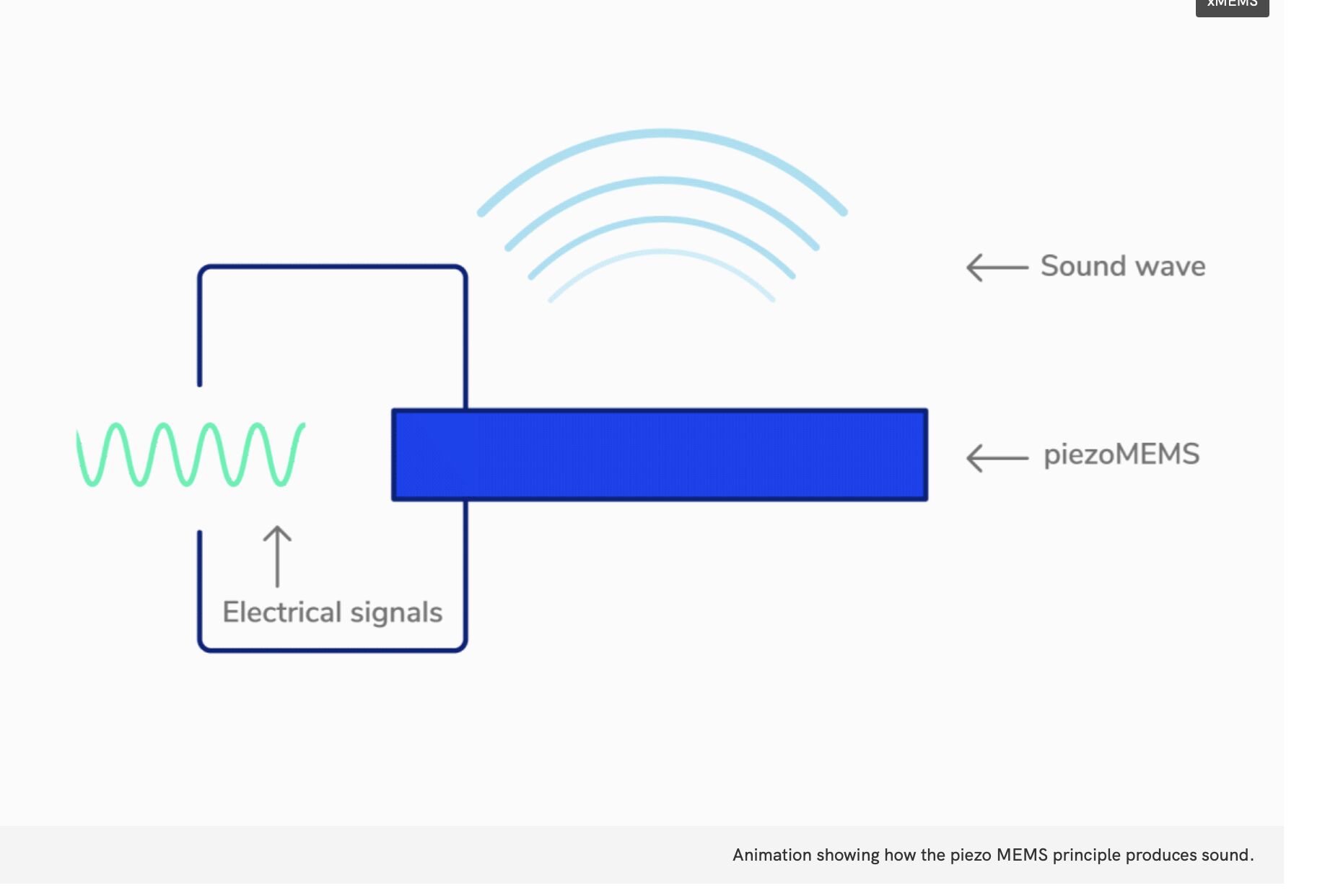
Due to the low mass of the material used, all of this can be incorporated into very small devices (such as mobile phones). The thickness of a MEMS driver is less than 1 mm. Key characteristics include speed (claimed to be 150 times faster than conventional materials), better phase coherence and linear response. MEMS drivers are said to excel particularly in reproducing higher frequencies, up to as high as 80Hz. This, in turn, has positive effects on the reproduction of transients (overtones, soundstage, room acoustics).
The Kiwi Ears Halcyon
Three technologies work together in these IEMs: a dynamic driver for the bass, three balanced armature drivers for the midrange and upper midrange, and the MEMS driver for the treble and ultra-high frequencies. The two earpieces are made of aluminium, feel robust and are beautifully finished. The IEM comes in a standard case-like box. The included cable allows you to connect either a 3.5mm or a 4.4mm Pentaconn plug. A number of ear tips and spare filters are included.
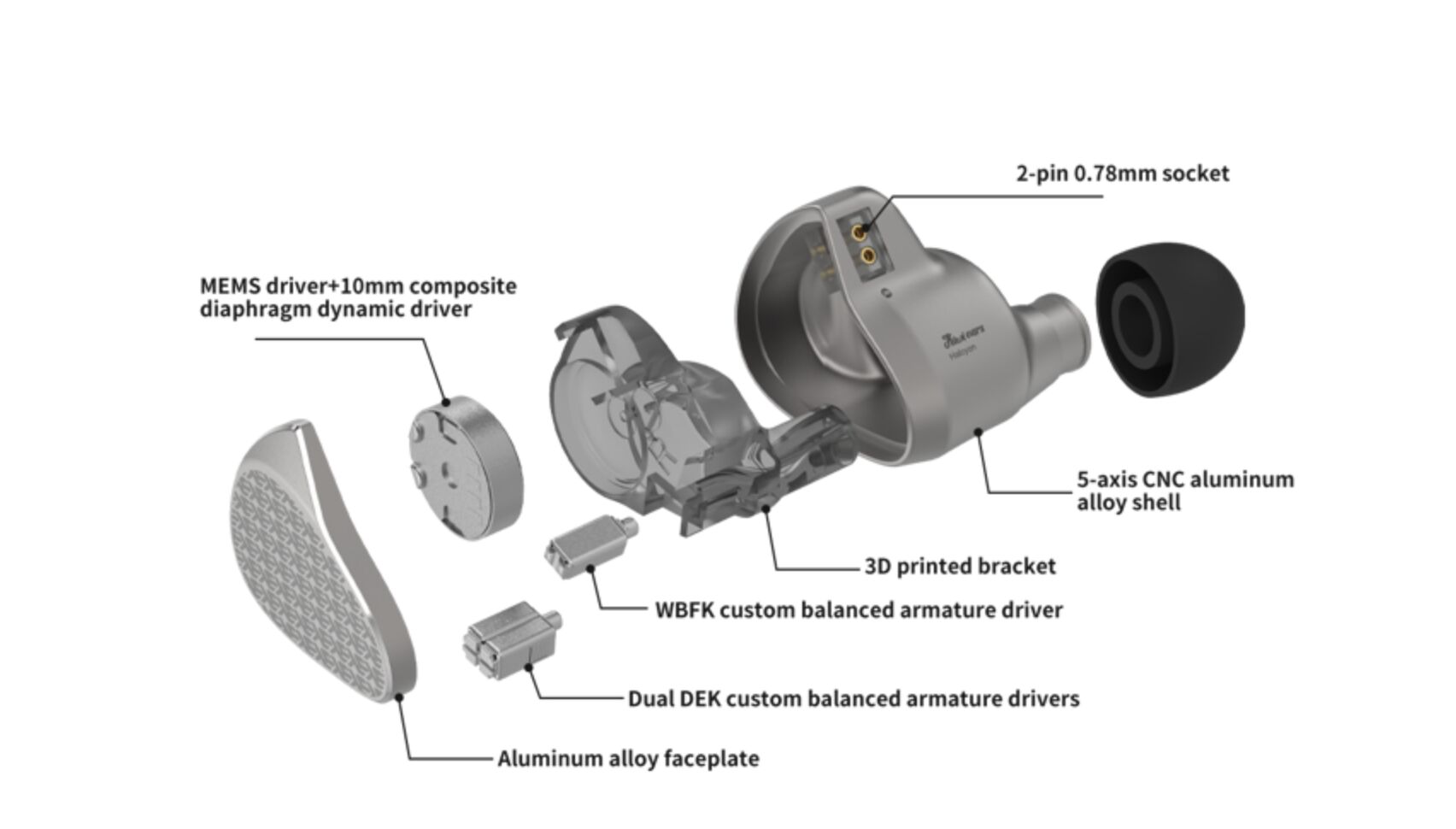
Thanks to their compact design, the Halcyons feel comfortable. The included ear tips didn’t fit quite right. Fortunately, we have access to Campfire’s ‘tea box’ mentioned in previous reviews, the Flight Curated Eartip Pack. What a difference! We’ll say it again: invest time (and perhaps money too) in finding well-fitting eartips. It doesn’t make just a slight difference; it’s a world of difference. With a poorly fitting set, the sound is dull and flat, or conversely, very bass-heavy. It can sometimes be a tedious task, but when you get it right, you’ll be rewarded in the end!