





Listening to the Kiwi Ears Belle
Contents
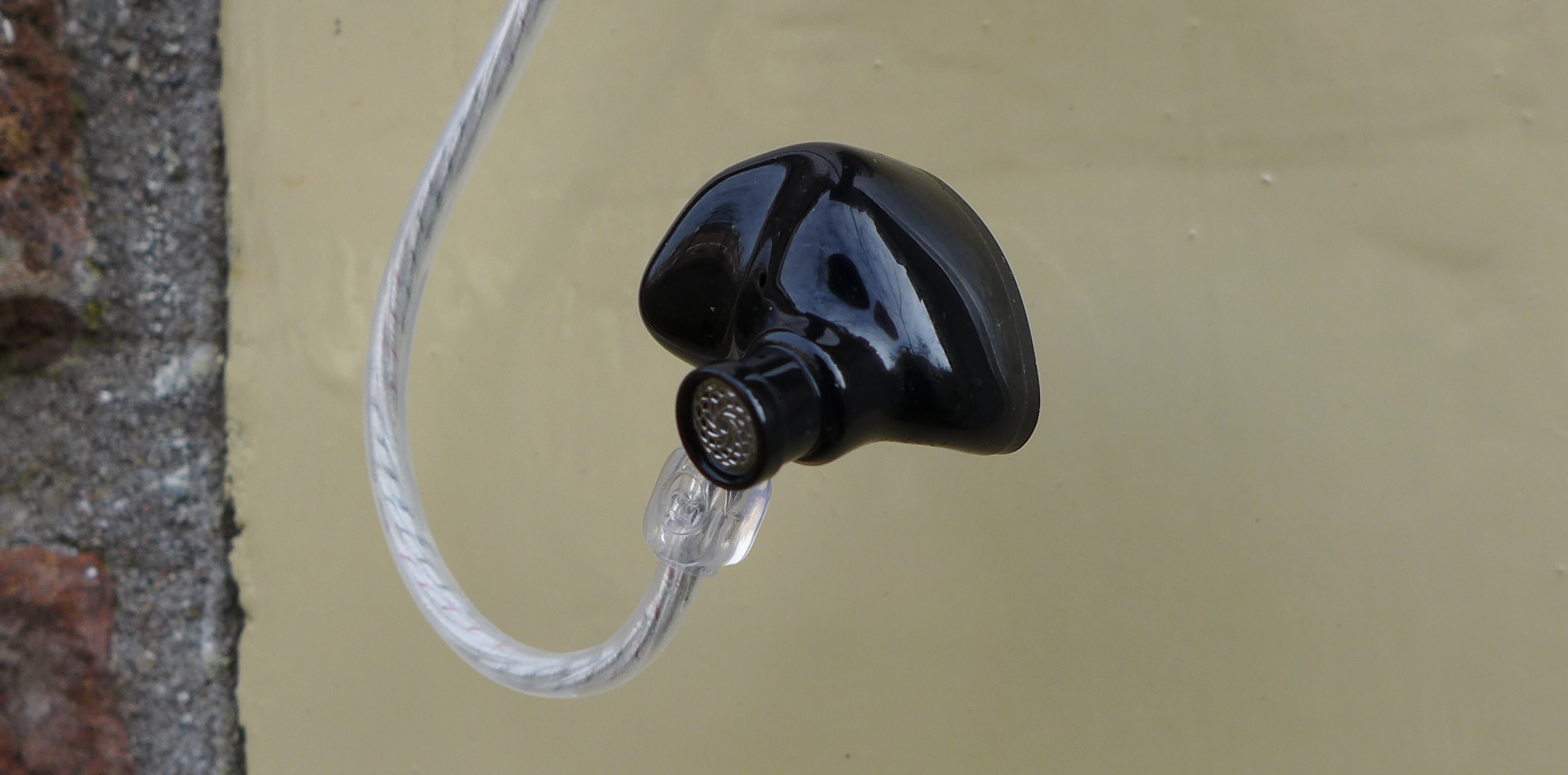
The lightweight Kiwi Ears Belle are very comfortable. It is also striking that the thin cable is not really sensitive to contact noise. Other models from Kiwi Ears did suffer from this, so it is worth mentioning.


Small and light, then. And those are also the sound characteristics we attribute to Belle. And that’s not meant negatively, on the contrary. With every track we play, we are treated to beautiful mids.
Beautiful mids, what does he mean by that?
It is a misconception that music sounds good when the bass and high tones are clearly audible. That is more or less the essence of the Loudness War: the fuller the track, the better. And it is not pleasant to listen to, especially not for long periods of time.
Our colleague Jaap once reviewed bookshelf speakers from Stenheim. At first, they didn’t sound very “pleasant” at all. After a week, my colleague Jaap couldn’t do without them. So much expression and detail, without any listening fatigue.
Ojos de Brujo: rhythm & pace
We are listening to a track that’s so complex that many devices in the audio chain get lost. The timing is so important, and the superette basses create a messy sound image in some situations. The bass doesn’t run in sync with the other rhythmic antics. We’re talking about Ojos de Brujo, a group that mixes flamenco with hip hop and other newfangled stuff.
The result is a feast of rhythm, vocals and classical guitar mixed with EDM. Beautifully recorded with great spatiality. The album “Barí” features a track with percussion: cajons, clapping and voices. It is as if you’re in a small square in southern Spain and the band is playing between the columns of a gallery. The Belles reproduce it all very nicely.
Yes, we miss the deep bass, but we don’t miss it either. The bass is reproduced deeply enough and is well balanced with the rest. We hear it all beautifully reproduced spatially and it never loses its overview. And that is very impressive because we have heard many audio systems hopelessly tangled up when playing Ojos de Brujo. We also hear the control that is there when we play via the Mutec and the Fostex headphone amplifier. And how the inline USB-C adapter sounds great, but with less clarity and authority.
Zelenka: soundstage
The Kiwi Ears in-ears surprised us from the start with their excellent midrange. The Belles confirm this once again. More listening!
Jan Dismas Zelenka (1679-1745) was a Czech composer and contemporary of Johann Sebastian Bach, Philip Telemann and Vivaldi. He was much admired in his day and it is remarkable that his work is performed less often than that of the other Baroque composers mentioned. Zelenka wrote many religious pieces for choir and orchestra; we play the trill sonatas for oboe, bassoon and ensemble.
Heinz Holliger on oboe, a recording by ECM from 1999. Beautiful both musically and in terms of recording quality. Belle, indeed! They reproduce it effortlessly. The oboe is emphatically present, as it should be. We hear the placement of the players beautifully depicted.
And to think that the Kiwi Ears Belle cost 30 euros!
The seventies
How about some vocal work then? The Singers Unlimited was a vocal group from the US, very popular in the 1970s. They recorded their work for the famous German label MPS, where the owner Hans Georg Brunner-Schwer had advanced multitrack recording equipment and, more importantly, the skill to mix and massage it into something beautiful.
The enormously rich, overprinted voices and Bonnie Herman’s lead vocals are beautifully spacious and clear. We do miss the bass more in a cappella than in the pieces played before.
From The Singers Unlimited and Bonnie Herman, it is a small step to The Carpenters. We can be brief: the Belles excel at accurately reproducing the midrange, and Karen Carpenter’s voice sounds as it should: warm and with all the details that can be heard in the excellent recordings. The recording studios did such a good job in that period. The music sounds so fresh and layered, it is a delight to listen to.
And that is why we play Harlem River Drive last. Our colleague Martijn recently discovered this 1971 album. It’s a pioneering album in which black and Latin music came together for the first time. We hear the Latin percussion, the blaxploitation engagement, lyrics and funk, rawness and elegance. And again, it is so well recorded. The reverb is audible in great detail. With the in-ears, we’re right in the middle of it. Would we like to hear more bass? Yes, the Belles don’t go that deep, but the sax growls in the right ear even without going deep. For a beautiful Harlem River Drive reunion concert with some of the original musicians, check out this page from NPR.
Conclusion
The Kiwi Ears Belle is a special set of in-ears. It excels in the midrange and lacks deep bass, which we don't miss. We've experienced this before. With the Stenheims Two (10,000 per pair) and the ATC SCM20A active studio monitors (6,750 per pair). And now with the Kiwi Ears Belle (30 euro per pair).
To be honest, we didn't find the Belles particularly special at first. But after intensive and prolonged listening, we can conclude that:1) we just want to listen to them more and more, and
2) they make us very happy!
Here it is: Alpha Approved!