



Intro
Contents
Regular readers of Alpha Audio probably already know this: we’re pretty fond of brands with studio roots. The reason is actually quite simple: those brands stay true to the recording, give the artist room to shine, and aren’t preoccupied with “ego trips” in the form of putting on a show. Does that sound like music to your ears, too? Then this review might be of interest to you. Just be prepared for a price tag of 24,000 euros per pair. And most likely a waiting list, too, since they’re sold out as of this writing. Oh well… Of course, new ones will be coming; production is in full swing.
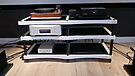
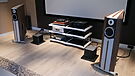
We traveled to Terrason Audio – the importer of Grimm Audio – to give the Grimm PA1 a thorough listen. Bert Bazuin, owner of Terrason Audio, has set up a system where we should be able to hear its potential. The system consists of:
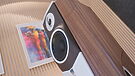
- Diapason Didascalìa speakers
- Grimm MU2 streamer / preamplifier
- Grimm PA1 power amplifiers
- Esoteric K-03XD CD player (digitally connected to the MU2)
This is certainly no run-of-the-mill system. Even without cabling, we’re already talking about an astronomical sum of over 130,000 euros. In short: for the happy few!
A Bit of Technology
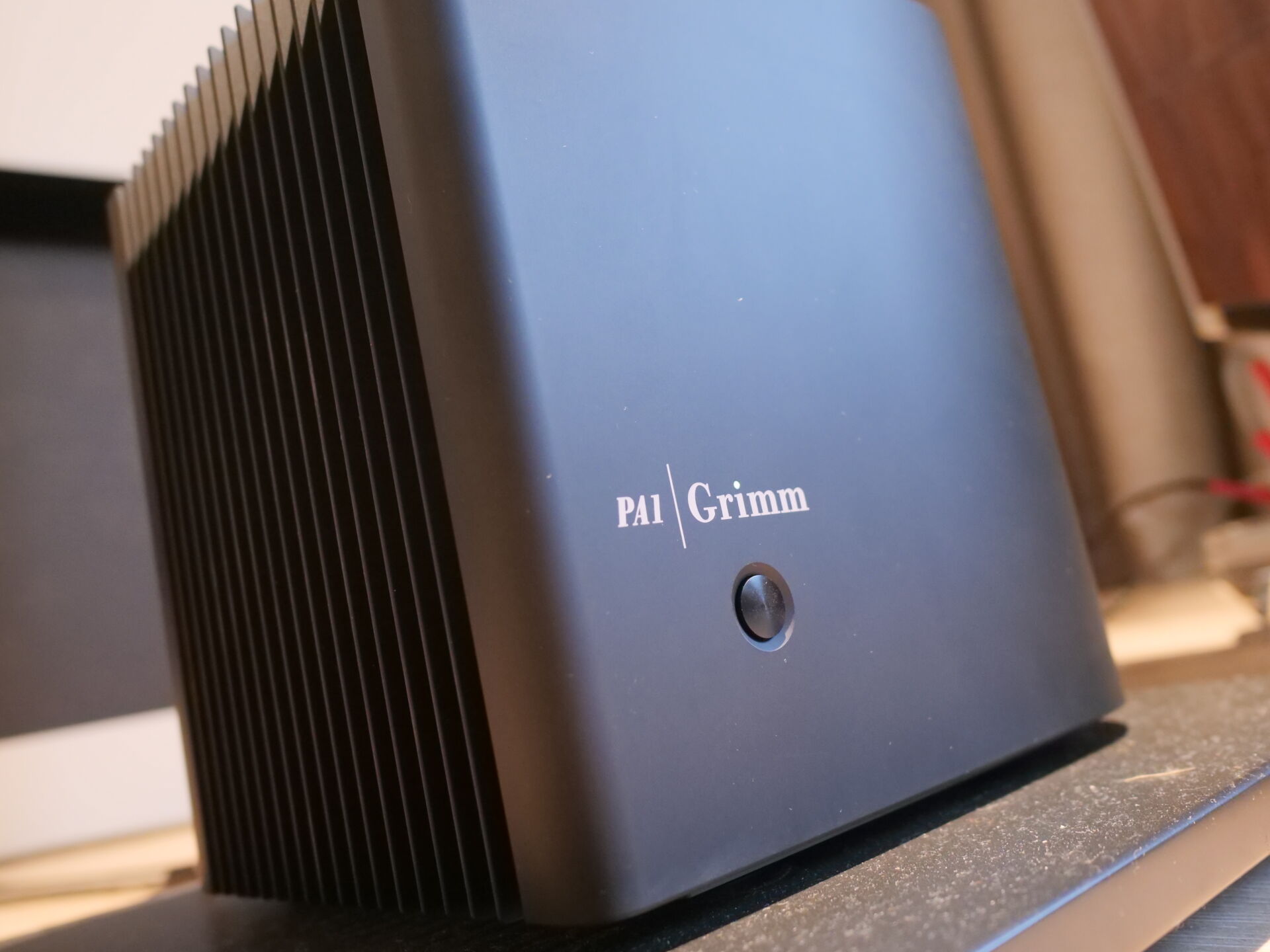
The Grimm Audio PA1 is yet another typical Grimm product. They didn’t just take an existing design and build it with just better quality components. It’s an amplifier where you quickly realize that they looked beyond mere specifications like power output and a nice THD value.
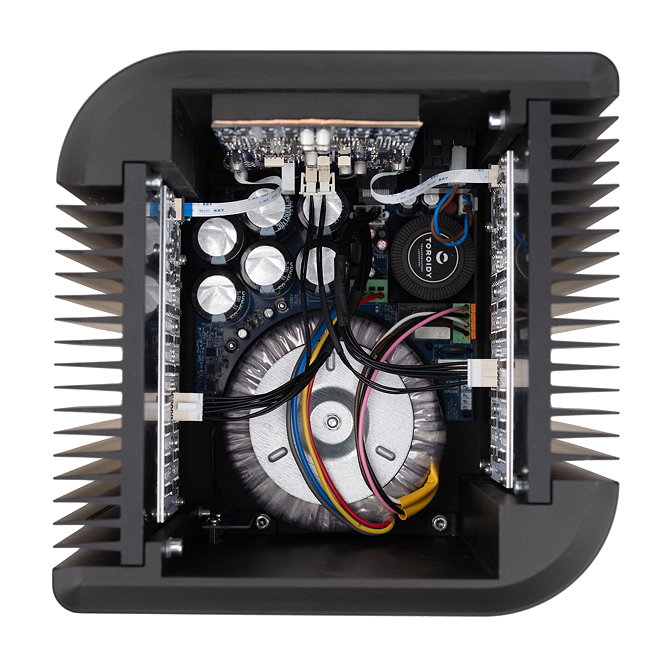
Grimm has opted for a symmetrical design centered around 96(!) small and extremely fast power transistors, mounted on an aluminum heat sink. This design is intentional. As a result, the transistors are thermally very close together, which keeps the quiescent current – or bias – under very precise control.
This principle dates back to a 1985 design by Henk ten Pierick of Philips and has one primary goal: to prevent distortion as much as possible at the source. Rather than correcting it afterward with massive amounts of negative feedback, the aim is to ensure that the amplifier operates cleanly, quickly, and predictably on its own.
Phase response also receives special attention in the PA1, including feedforward correction and a carefully designed negative feedback loop. And that’s typical of Grimm: everything must be technically sound as well as that is measures correctly. However, it is especially important that the electronics leave as little of their own signature as possible. As we’ve already mentioned: brands with studio roots prioritize purity—as little signature as possible.
The remaining part of the PA1 is built with the same consistency. The signal path is short, coupling capacitors and relay contacts in the audio signal have been avoided, and the power supply is robustly designed with a nice, large Amplimo toroidal core and 90,000 µF of buffering; that’s truly sufficient for powerful peaks and dynamic range.
The compact monoblocks deliver 150 watts into 8 ohms and 200 watts into 4 ohms, combining this with extremely low distortion, a high damping factor, and a very wide bandwidth. That’s all very nice, but what’s more important is the philosophy behind it: Grimm wants the amplifier to perform consistently, even with dynamic music and challenging speaker loads. No change in timbre, no compression, no harshness. The Grimm PA1 must always remain in control. Airiness, fluidity, and speed. In other words, it must remain inaudible. But did it succeed?