



Intro
Contents
The Volumio Preciso is a stand-alone DAC. It is a logical addition to Volumio’s lineup. How does this DAC fit into the Volumio offering? You can read about it in the review.
In addition to the Primo and Motivo streaming DACs and the Integro all-in-one, Volumio supplies two stand-alone streamers: the Rivo and the Rivo+. The release of a matching DAC is a logical addition.
The Volumio Preciso hardware
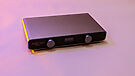
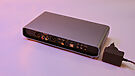
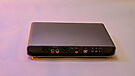
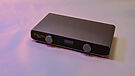
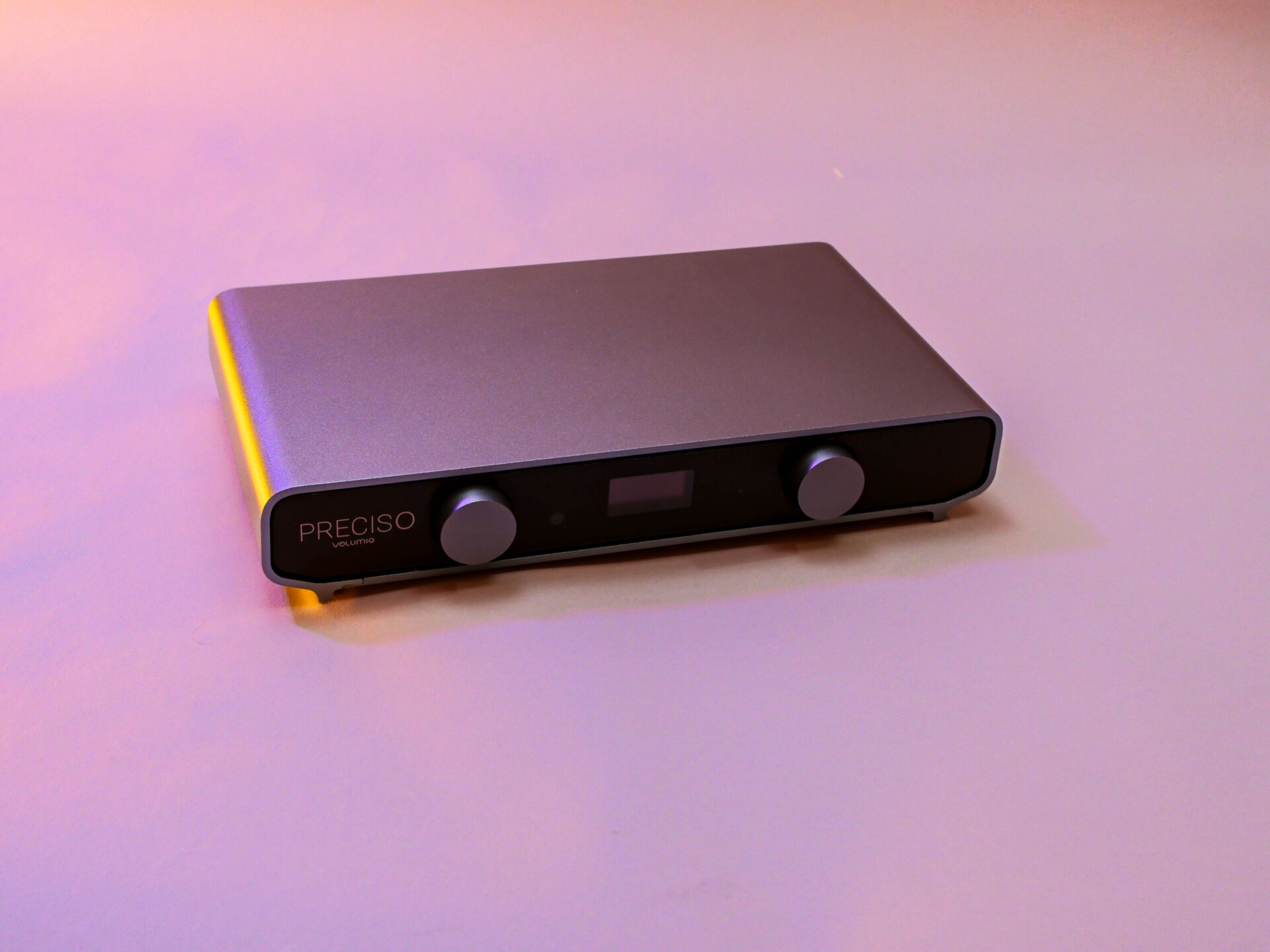
The Preciso has the same stylish design as other Volumio products and fits nicely next to the Rivo or Rivo+. The two rotary knobs feel a bit fragile in relation to the sturdy housing.
On paper, it is a nice setup. Two SABRE ESS ES9039Q2M DACs are used, one for each channel. Much attention has been paid to the USB interface, and Volumio supplies a USB cable in the box with the Preciso. USB thus seems to be the preferred connection.
Also available are a coaxial SPDIF, a TOSLink and an I2S input. The manual indicates which pins of the I2S are used for what purpose, but it does not specify a name of the configuration. An AES/EBU connection is unfortunately missing.
The analog output is either a RCA connection or a XLR connection.
The Volumio Preciso settings
The number of settings is comprehensible. With 1 button you choose the input you want to activate, or you can click on it to get into the settings menu. With the other button you can control the output volume or by clicking on it you can go in and out of standby.
Unfortunately, in the settings you cannot choose to set a fixed output volume, which is a shortcoming. Luckily, the brightness of the display and LED can be adjusted in the menu.
Preference for which DAC filter to use can be set, the familiar Sabre options are available. We tested with “minimum phase, slow roll-off”.
Firmware 1.2.4 adds a Non Oversampling (NOS) mode to the menu. After very concentrated listening, you reviewer hears that the timbre of especially wood and brass instruments in the orchestra changes slightly, perhaps a tad more organic sounding, but at the expense of the spaciousness in the sound. It is nice that the option is available, but do not expect shocking differences.
Once the settings are chosen they probably stay that way.