






Intro
Contents
Cables are cables… And differences are only in our head. Sure! If you want to believe that, this review is not for you. Especially not, since we are now going to peek into the serious segment. For we are going to take a closer look at Yeti’s NextGen. A cable built with Carbon Nanotubes…. Nice!
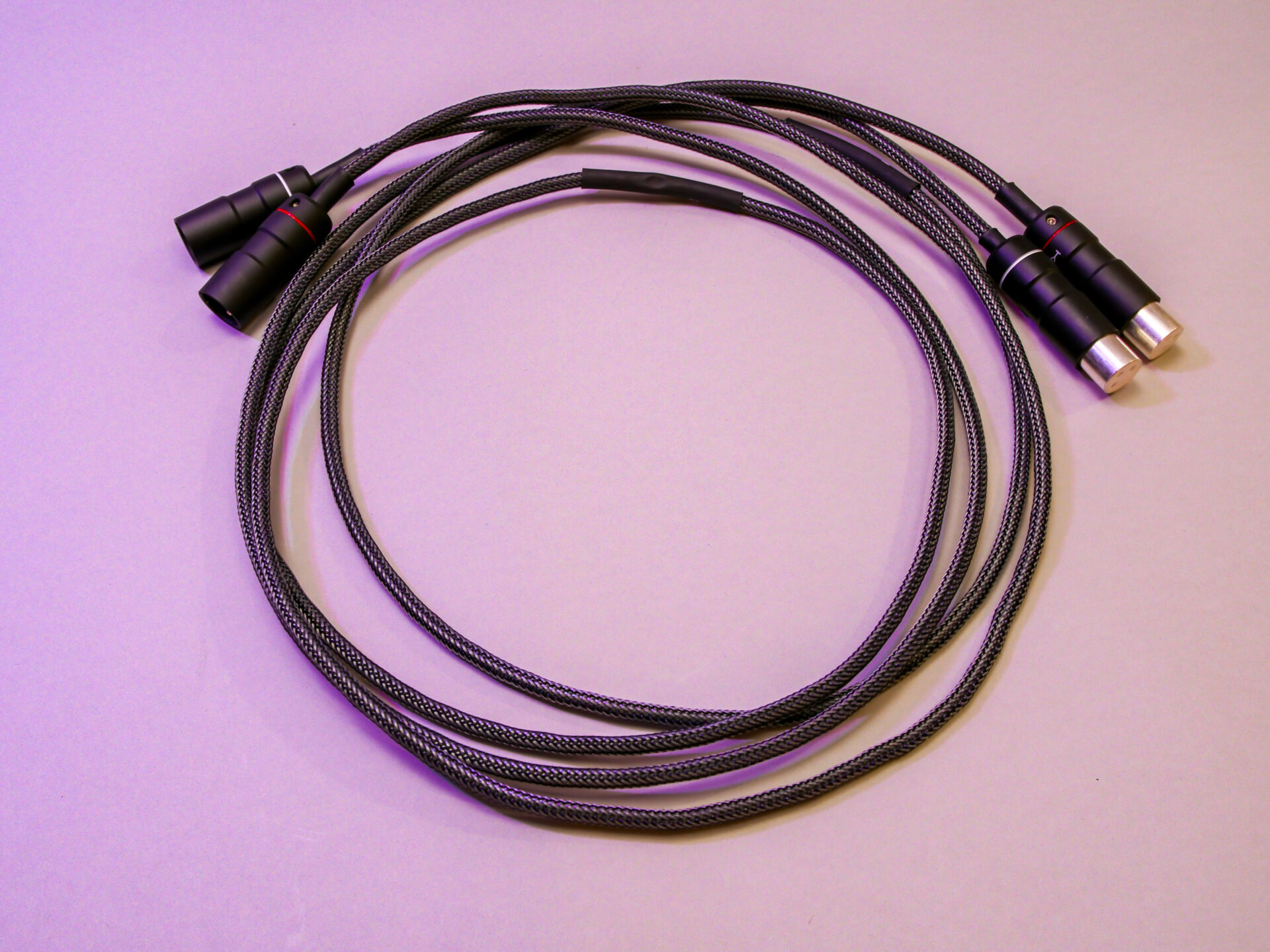
We received from Yeti Acoustics a 2-meter version of the NextGen Carbon Nano Tube interlink. A nicely finished cable at 4599 Euro for 1 meter. Each 0.25M costs 499 Euros. The cable is finished with particularly pleasant and nice ETI Cryo XLR plugs.
We know by now that Yeti doesn’t believe in shielding. They don’t do that with interlinks, nor with speaker cables and mains cabling. So this CNT has no shielding either. According to Yeti, that results in a much more open sound with better energy conservation and better timing. The fact is: shielding does something. It is audible. Whether it is better or not depends, in our opinion, on the system and the method of shielding.
What we know about the construction is that the carbon nanotube strands are wrapped in nylon as insulation. Two CNT strands are twisted around a metal ground wire (it has to be metal to keep the resistance to ground low enough). To finish it, Yeti wraps a neat “sock” around the cable.
Carbon Nano Tube



The type of Carbon Nano Tube in this NextGen is a bit thicker than in the first version we tested. On the other hand, it is a lot thinner than the one used in the Conductor (the top model Carbon Nano Tube). Well… you get what you pay for!
Getting the material into the plug properly and firmly requires a lot of work. After all, you can’t solder this material. So something else is needed to fix it properly and make it conduct well. Yeti spent quite some time getting that right. We won’t tell you in detail how it’s done; that’s a bit of a secret. But what we can tell you is: it is not soldered. And to secure it properly and keep the resistance low is not easy.
Briefly about Carbon Nanotube
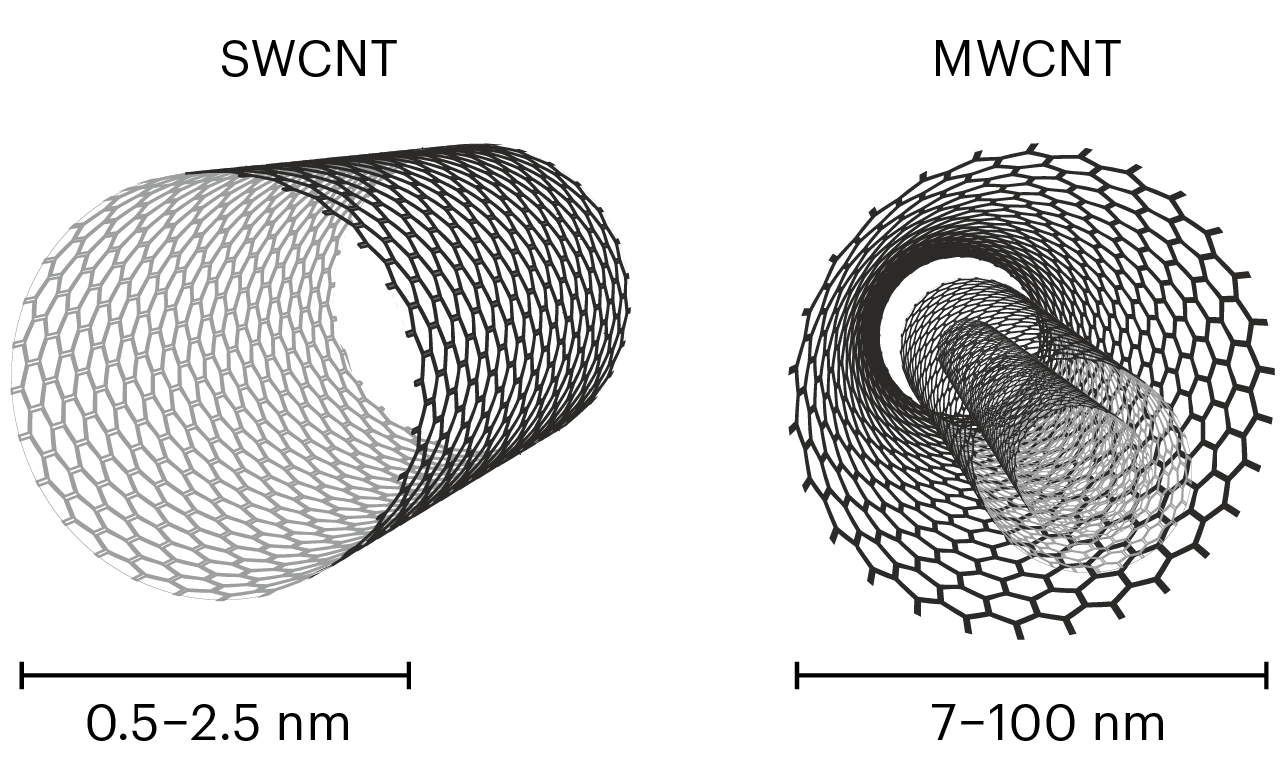
It might be helpful to mention that there are two types of CNT: single-walled (SWCNT) and multi-walled (MWCNT). Both involve carbon nanotubes in a hexagonal lattice. Under a microscope, this looks like a kind of graphene sheet. A perfect CNT cable has very high conductivity and is incredibly strong. They are also extremely thermally stable.
With that in mind, CNT is particularly suitable as a conductor in audio applications. High conductivity, strong and thermally stable. However, know that good CNTs are quite pricey, so very thin strands are used in almost all cases. So, in theorey, the very high conductivity is possible, but unprecedentedly expensive to achieve. Hence the ‘spicy’ prices of CNT cables. Especially speaker cables where higher conductance (low impedance) is important.


