



Just like other retro music formats, the CD is on the rise again. And that comes with both pros and cons for fans of the shiny disc.
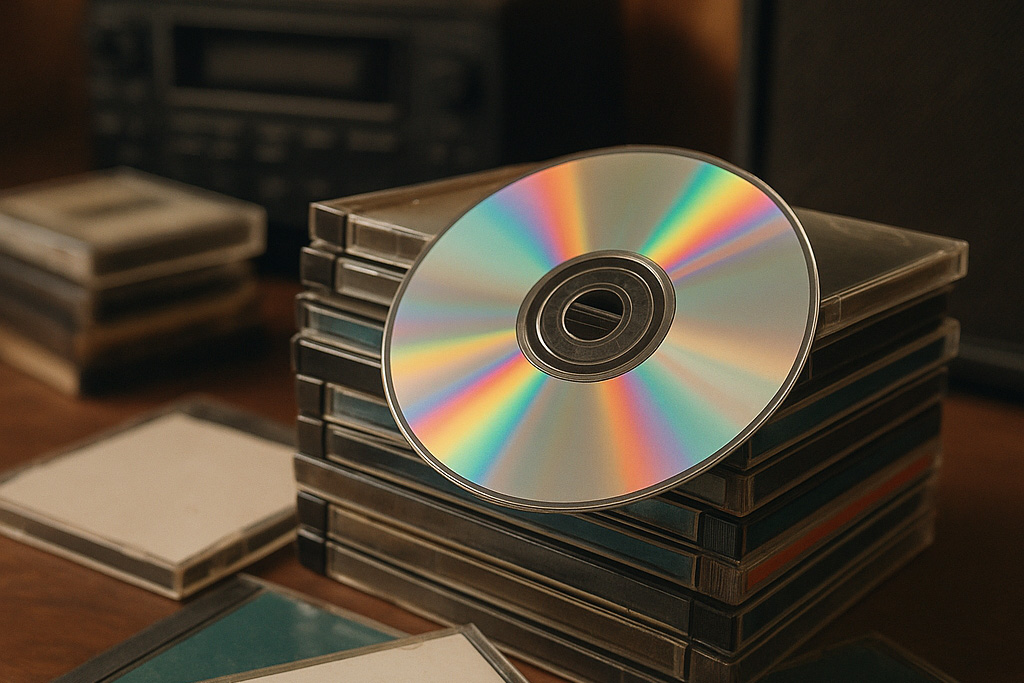
CDs have been available to consumers since 1983 (or ’82, depending on sources). Back in the day, they were quite expensive—astronomically so, if you like. Especially when it came to new releases. Today, the CD plays only a minor role in the market, mostly due to the dominance of streaming and the maturity of the digital hi-res download sector. Still, if you’re someone who prefers having something tangible in hand, the good old CD is not a bad choice at all. A well-recorded disc can still sound fantastic. It’s something a growing number of people are rediscovering.
As a result, you’ll now increasingly see CDs popping up at record fairs, alongside vinyl and even cassette tapes. At the moment, you can still score second-hand CDs—or unsold stock from the past—for a very reasonable price. Just a few euros is often enough. But beware: prices are creeping up, just like they did with vinyl.
Strike While the Iron’s Hot
So if you want to pick up CDs at truly fair prices, now is the time. Before the market gets spoiled by bearded hipsters driving up the prices. Sites like eBay are still home to plenty of sellers with massive CD collections. Some are even still sealed—what more could you ask for? If you’re buying second-hand, it’s wise—if possible—to check the condition of the disc beforehand. For a few euros, taking a gamble might be fine, but pricier collector’s items shouldn’t end in disappointment.
Inspect Before You Buy
Pressed CDs generally age well. We’re talking about real, factory-pressed discs here—not CD-Rs. Most CD-Rs already no longer work properly due to degradation of the organic dye layer used in their construction. Pressed discs don’t suffer from this and, if treated with a bit of care, will remain playable for decades. And if you do happen to pick up a scratched CD, all is not lost. Scratches can usually be polished out with a disc repair machine—often found in retro game stores, for example. Just note: scratches can only be removed from the bottom of a disc. If the label side is damaged, there’s nothing that can be done—you’re better off leaving it.
CD Players
A welcome side effect of the slowly growing CD revival is that manufacturers are once again seeing potential in CD players. So don’t throw out that old CD collection in your attic just yet—it still holds years of musical enjoyment. And occasionally spending a little on a new old disc certainly doesn’t hurt either.