



Used equipment
Contents
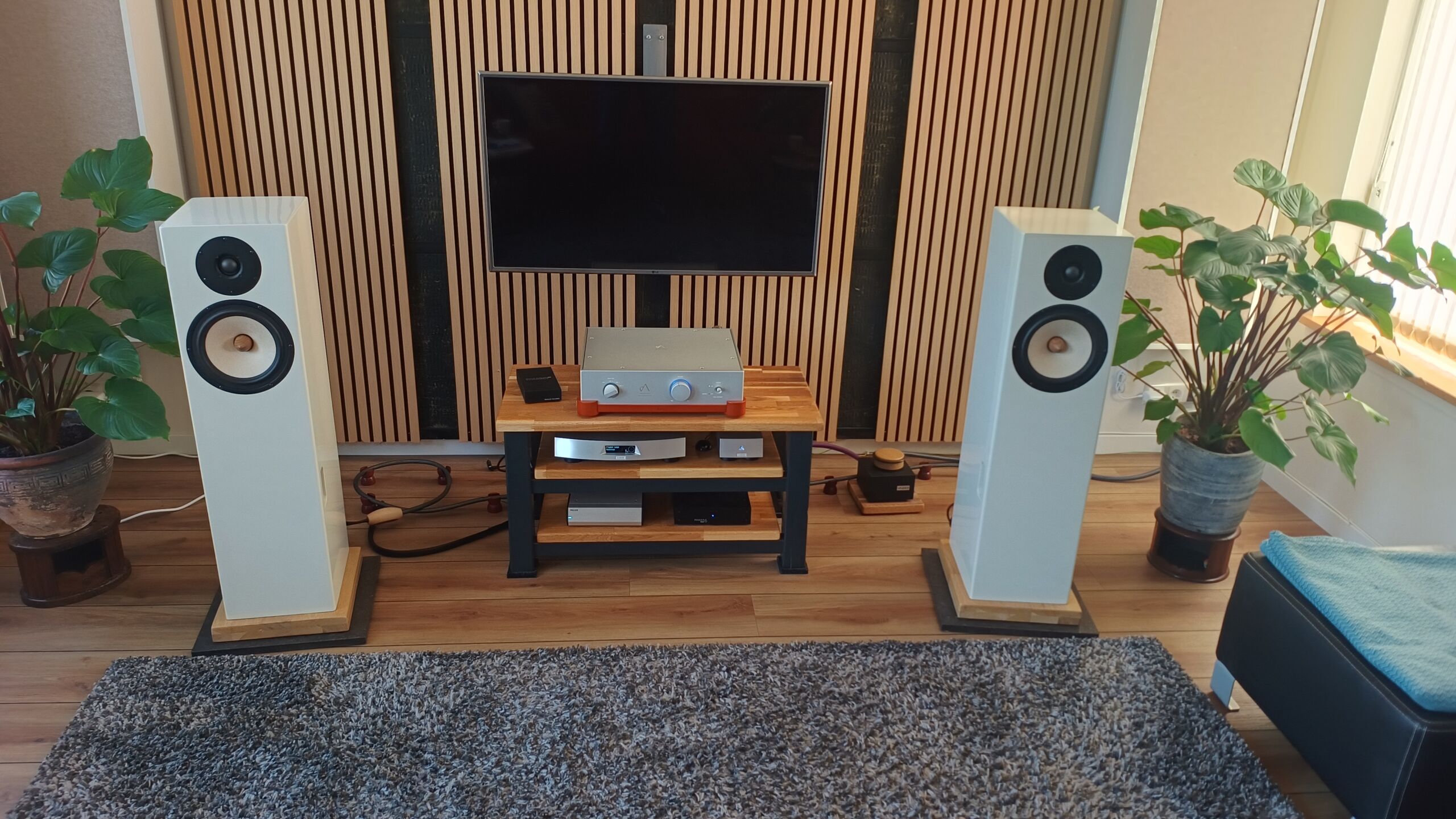
For this test we are playing with Arno’s system and have the following components at our disposal:
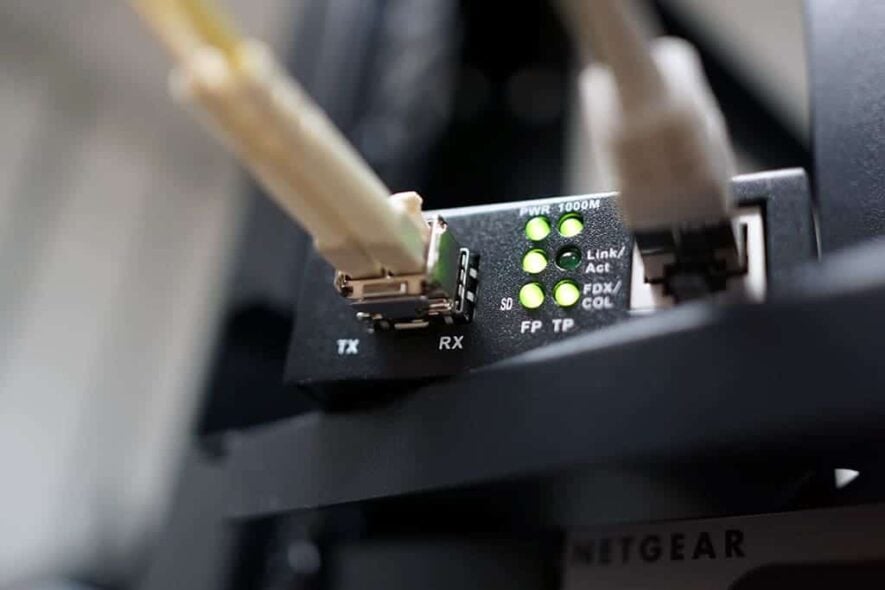
1) the Lumin X1 streamer/DAC, with an SFP connection and thus the possibility of a fiber connection
2) a Melco S100 switch powered by a Farad super 6 LPS. The Melco S 100 is an audiophile switch with high-quality components and housing specially designed to minimize vibration, has a packet buffer of 1.5 MB, data are re-clocked, the so-called “traffic settings” that process the data are optimized for audio. All this to get the noise level as low as possible, this is further improved by the external Farad Super6. The switch includes 2 SFP connections and 8 RJ45, two of which are 100Mb/s full duplex that are recommended to connect to the streamer. The Melco S100 is no longer available, the company is now called Dela and provides a nice range of high quality switches, the entry level model, the S50 starts at € 3598, gulp.
3) Adot single mode glass fiber with associated SFP transceivers
4) Uptimed multimode glass fiber with associated SFP transceivers
From the respective vendors, we have added the following components there:
5) Melco C1 D20 direct attach SFP cable
6) Network acoustics Muon pro filter with RJ45 streaming cable, this is the top model passive filter from Network Acoustics with an 8 core design for effective filtering of EMI and RFI and high quality RJ45 connections. According to NA, the filter works preferably with a good streaming cable in front of it and behind it. And if you want to optimize it further you can cascade a muon pro between your router and your switch and a Muon pro between your switch and your streamer. Every step that lowers your noise level will improve the quality. Works between 10Mb/s and 2.5 Gb/s, but optimally tuned for 1 Gb/s by Network Acoustics. In this test we will not place it behind the switch because in practice few people will buy an expensive switch and a passive filter.
Further components of the installation
Speakers: Seas Exotic Tower homebrew
Amplifier: Spec RSA F33EX
Speaker cable: Jorma Design Unity
Interlink: Logic Audio SUPREME XLR (Sommer)
Power supply: Audes DC blocker followed by a Shunyata Venom mains filter connected to Audes PC2 cables
Power cables: Yeti reference V3 for amplifier and streamer, Furutech DPS 4.1 for the switch
Grounding: Puritan Audio ground and route master connected to a ground pin (for signal ground of all equipment and chassis ground of streamer and switch)
The music
For testing, we use two songs and with both songs we switch cables several times to determine the differences.
The first song is “Comme un Tango” by Vincent Belanger and Anne Bisson, Comme un tango is a good recording that is relatively easy to reproduce, no complex music, instruments remain nicely separated from each other. Here you can properly determine the stereo image and how natural the instruments sound. The song is a combination of jazz and classical with an upright bass, cello, piano and harp, the driving bass and cello provide a subtle tango line.
The second song is “Present Tense” by Radiohead. Thom Yorke on acoustic guitar strumming throughout the song, below that a drum roll, multiple layers of background vocals and guitar/strings-like arrangements and something of a shaker. It’s an atmospheric hypnotic song that builds towards the middle and becomes increasingly complex and intense, this clearly demands more from the rig, we’ll see how the cables hold up.
Network is so rewarding to work on! First added a netgear after the famous switch livestream, then an ethernet filter and now a psu for my netgear, what an amazing series of improvements it was! It’s staggering.
Basically it’s better
Probably not on the same level as these options, but wondering how single box units that change rj45 Ethernet to fiber – then back to Ethernet – compare? There are a few out there. Ifi comes to mind, but I think another that was put out there and reviewed by iiwi reviews was the effe-01.
You know you could look at the packets and see how many re-transmissions are happening with various setups. Not that I think 1s and 0s are the only thing, but error rate can effect the endpoint of any network system. Isolation is probably just as important.
From what I’ve tested, the best results were obtained with single mode fiber OM2 (yellow jacket), grade B LC connectors (aka “low insertion loss”) with UPC polish style (there’s PC, UPC, and APC Polish Styles that are not working best if combined). The actual fiber material sounds different from brand to brand, the fiber length determines the attenuation of the signal so shortest is best.
On the transciever side for best results you need 1310nm wavelength, industrial temperature (85 degrees Celsius … vs 70 degrees on commercial ones … I suspect the lens does not deform so much from the heat) and <=10km reach distance. Of course the transmission power and receiver sensitivity add more complexity here, but generally 1310nm + industrial temperature is the final goal, the differences are pretty negligible between brands.
I’ve used fiber in my local network for the audio path for about 3 years, experimenting with media converters, SM and MM fiber and transcievers. It sounded clean, detailed, with extended bass. One day I tried again copper and realized that the fiber sounded thin and it was missing some “air” (the brilliance range of frequencies).
I then discovered DAC cables and I was a bit skeptical because of the “lack of galvanic isolation” propaganda. You can look at DAC cables as being a kind of i2s (no signal conversion, minimum possible latency). The downside is the signal attenuation and the shortest cable is the best one. At the moment I use a 0.15m SFP28 DAC cable between my 2 SOtM switches before the streamer, and sound is snappier, more fluid and has more air and stage extension than the SM fiber I used to have to “clean up” the signal. Regarding DAC cables, I couldn’t find so far a way to DIY some cables using better (pure silver) wire, you have to rely on the manufacturer and the same silver plated OFC for drying your washed clothes.
For RJ45 Ethernet and fiber, read about serialization and transmission latency, the preparation phase (serialization) takes 2400x more time than the actual signal transmission (for each packet), then you add more latency at the receiving end and you’ll get bigger chances of things to go wrong. Oh, did I mention that within the fiber the signal transmission speed is lower by ~10% than in the copper medium? You add reflections and diffraction and you end up again with some imperfect medium (remember TOSLINK? it’s also fiber and offers galvanic isolation).
Hi Arno, this is a very interesting test and I think there’s certainly not enough on the internet for one to anticipate the influence this stuff has. I for one am still blown away by what a simple switch does and you guys at Alpha are at fault here. Your previous test is responsible for my house having 20 switches stored in a drawer. Network cables also play a very real and immediately discernible influence. Unfortunately I never experienced a system where fibre trumps good cooper but, then again, I don’t think I ever heard one with good fibre.
If you search the internet, you do get huge forum threads about types of fibre (Corning glass usually mentioned as giving the best results) and certain transceivers (Finisar is usually mentioned). It’s such a rabbit hole and not clear enough (for me at least) what form factors there are and go with what that I just stopped my hifi network thing here.
But I did invest in a good network infrastructure (two routers, one dirty side switch and a Matrix SS1 with Shunyata cables at the end) because to me it does a very significant difference. Doesn’t make much sense but it is very real. Cheers!