




The career of Daniel Weiss
Contents
Weiss needs no introduction in the studio world. The best studios in the world use the equipment made by founder and namesake Daniel Weiss from the pioneering days in digital audio. The AD and DA converters for mastering, digital processors for EQ, de-essers and compression are still state-of-the-art after more than 30 years.
For some years now, the Weiss outboard devices have been available as software plug-ins. The Swedish company Softube has written the code for the Weiss plugins with the cooperation of Daniel Weiss. Daniel has sometimes told us that the software versions are as good as the devices and that he is happy that this allows even more people to use the technology.
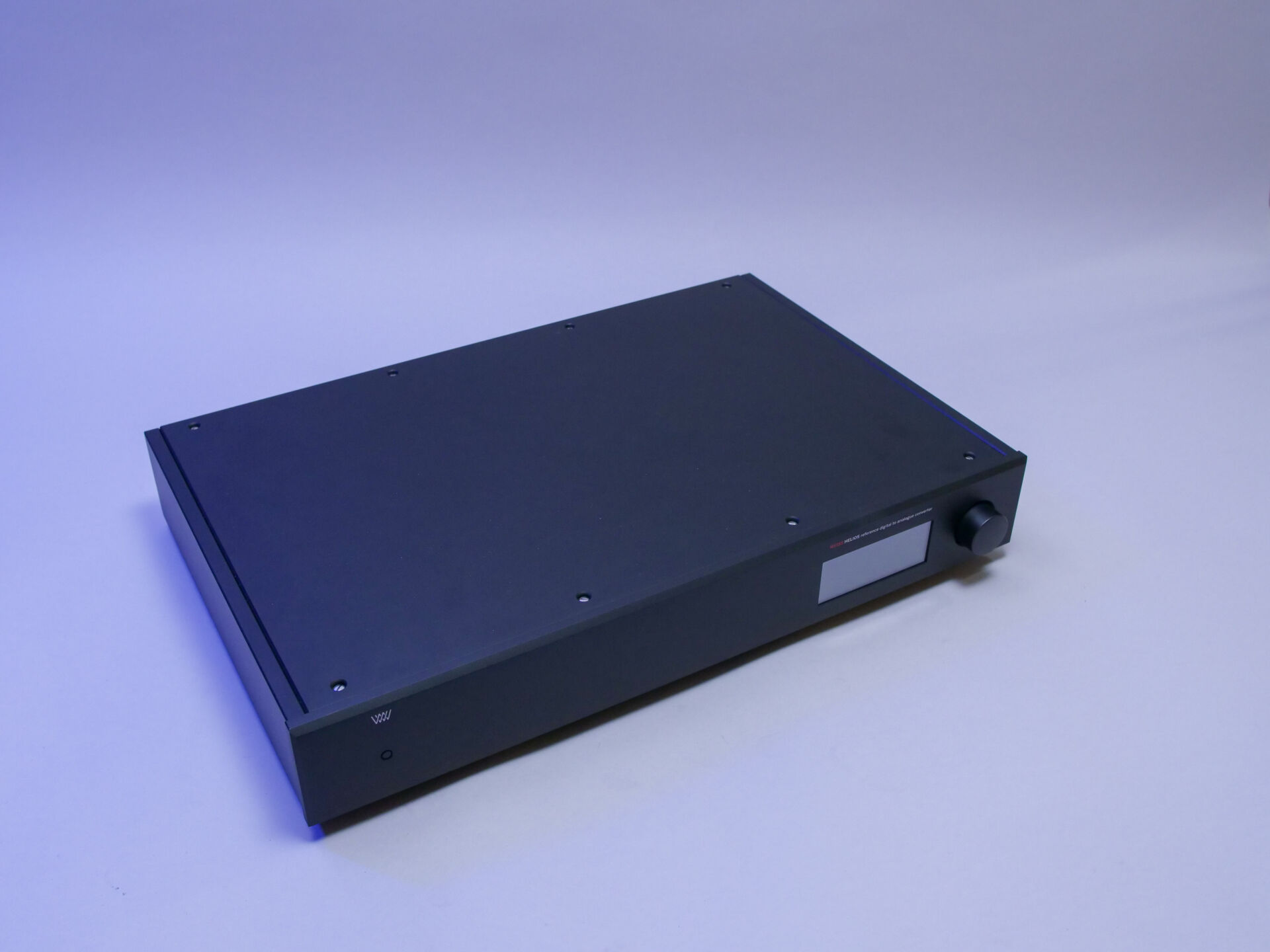
Yes, we are fans of this brand and that is also because of the person Daniel Weiss. To illustrate: colleague Martijn was in Weiss’ booth during the High End audio fair, where the 502 DAC/streamer was playing and could be listened to through Audeze headphones. After listening for a while, Martijn complimented Daniel on the sound of the DAC/streamer, to which Daniel replied, “Yes, it is a very good headphone.”
Grammy man
Daniel Weiss was awarded a technical Grammy in 2021 for his role in the development of digital signal processing. For those not so at home in this Grammy category, previous award winners have included Ray Dolby, Rupert Neve (mixing consoles), Robert Moog (synthesiser inventor), Les Paul (multitrack recording), Leo Fender (guitars). This does indicate the importance of Weiss’ role in the development of digital audio.
Much mentioned is his contribution to the development of sample frequency converters that make various digital standards compatible. He did this as early as the 1970s. Weiss also made an important contribution to the first digital recordings, making analogue mixing desks suitable for digital production through interfaces he built himself.
The digital domain
We delved a little deeper and it turns out that Daniel Weiss’ mission since 1985 has been to make the mastering chain completely digital without unnecessary conversions. In the early days of CD, signal processing (EQ, effects, soundstage etc) was not yet digital. Recordings were, so digital recordings were converted to analogue, processed and mastered on analogue studio equipment and converted back to digital. Ai Ai Ai!
Weiss made this process entirely digital for the mastering phase of studio production through a series of interfaces: digital equalisers, compressor/limiters, sampling rate converters, denoising, declicking, de-essing, you name it.
Back then (1980s), Weiss developed a 40-bit floating point DSP. Almost all CDs worldwide, produced in quality mastering studios were finished with Weiss equipment. Could this be why we often find the original CDs from the 80s and 90s sounding so remarkably good?