




The Weiss Helios DAC and preamp
Contents
Weiss has a line of professional studio products and one for consumers. For the latter category, Weiss currently offers the following DA converters:
- DAC204-mk2: DAC and digital format converter
- DAC205-mk2: DAC with coaxial and optical input
- DAC501/502-mk2: DAC/streamer
- Helios DAC streamer
Like the DAC 501/502, the Weiss Helios is equipped with the aforementioned software plugins. Using the remote control, but even better via the web interface, you can set different DSP categories to your preference. More on this later.
At the introduction of the Helios, Weiss writes that the 40 years of knowledge, development and history of the brand are gathered in this unit. Or to put it in Weiss’ words, “we know a thing or two about digital audio.”
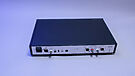
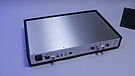
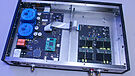
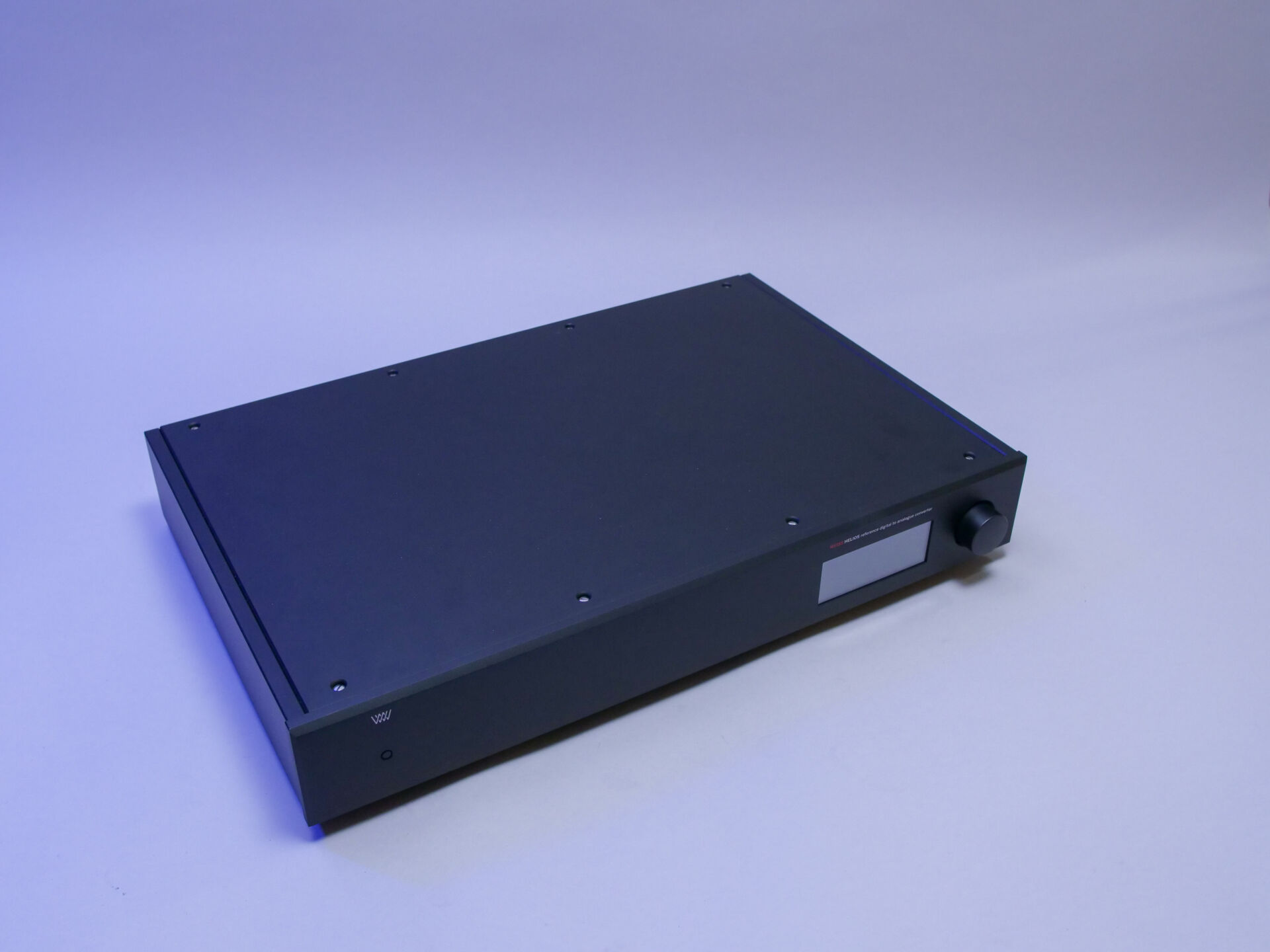
The Helios looks like the DAC502 on the outside but that’s exterior. When we unpack the Helios, we notice it first of all by its weight. At 14 kilos, the Helios is almost 10 kilos heavier than the DAC502. The housing has an inner frame made of stainless steel and the exterior chassis is made of thick aluminium plates. On board the Helios is the 32-bit ESS Sabre ES9038PRO HyperStream II D/A converter chip; the Helios uses 4 DAC channels, in parallel for each analogue output. The DAC502 uses 2 channels and also has another ESS DAC.
On the front, we see the power switch and a touchscreen display on the left. Behind the digital inputs are XLR, coax, optical USB and Ethernet. The analogue outputs are single ended and balanced. There is a separate headphone output, switched via the op-amp; the signal goes through the analogue outputs at the back of the Helios. Weiss offers a cable for headphones, either single ended or balanced.
OP2-B: a DAC is primarily analogue
Where the Helios really differs is that it has the OP2-B op-amp on board, an ‘operational amplifier’ developed by Weiss itself. In fact, this is the control centre between what comes out of the digital signal chain and how it is pre-amplified to the analogue outputs. The Helios’ analogue circuit has been completely rebuilt and has two separate output channels for the headphone output. This op-amp acts as the central switchbox and preamp between the digital and analogue circuitry.
Daniel Weiss has told us before that a DAC is primarily an analogue device. In the Helios, the signal processing between the digital and analogue parts is very well implemented. In listening tests, it always stands out: the phase purity, speed and precision. It sounds very natural, and this is apparently largely due to the quality of the Weiss OP2-B op-amp.
Remote on steroids
An infrared remote control can be used to operate the Helios, as well as the touchscreen on the device. We mainly worked with the web interface during the test period. With our browser, we connect to the Helios and this allows us to set all functions very easily and precisely.
And this immediately brings us to an aspect in which the Helios differs from other DACs we have had the pleasure of listening to so far. A DA-converter could be compared to a phono preamplifier. It translates a signal into human-audible levels. Once set, it is a box that just has to do its job. Switch it on and don’t think about it. Set and forget.
The Helios is different. It allows the user to adjust the signal in detail. That starts with the output voltage for the line outputs and headphone output. On the Alpha Audio forum, readers have shared how much difference a good match between output and input voltage makes.
Every music track has a different pattern: in dynamics, dynamic range, compression. With that, each track also has a different electrical output. The Helios’ web interface makes it very easy to play with these output voltages. And that’s just the beginning. The Helios houses a consumer version of the DSPs Weiss applies in its professional audio line. More on that later, too. By the way, you can capture presets via the web interface in the remote control; 12 presets are possible.