




Listening to the Weiss Helios
Contents
The Libratone Live experience
As you know, I am mostly into personal audio. The audio equipment is on my desk; a couple of DACs, a CD player, a reclocker and headphone amplifiers. Speakers are secondary for me.
If I want to listen to speakers, I have a wide range of top monitors to choose from in the studio at the Nieuwplaatz, from near field to long throw. At home, I currently use the Libratone Live Lounge and the Lounge(review can be read here). These are Airplay speakers (active) with ribbed tweeters that also have a 3.5mm input. More or less intended as a fun start to the test, I connect the Helios to the Libratone Live.

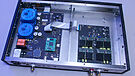
What immediately stands out is the tightness of the playback. The Helios ‘totally rocks’, as they used to say. It is mainly the bass and percussion that give a solid foundation to the music with every track. The phase-correctness of the playback ensures that it sounds good, even when heard from another room or another floor. No booming bass or snippets of sound. Itis as if a real instrument is playing.
The Libratone suddenly sounds like a studio monitor. And yes, we hear that even on a – comparatively speaking – very modest active speaker that is over 10 years old. It is a celebration of tightness and musicality. It also surprises visitors (“where are the speakers, this surely sounds great”).
Pushing the limits of the DAC
Colleague Martijn has had the Helios at home. Herewith some of his listening notes:
The album “Dislocation Blues” by Jeff Lang and Chris Whitley is an album mastered at high output volume and with lots of dynamics. Microphones are placed close to guitar amps. On many tracks, Chris Whitley plays on a National Steel Guitar and Jeff Lang shows off his blues licks on electric guitar. The combination produces a complex audio signal, a microdynamic obstacle course for DACs.
More near sounding than with the Helios is almost inconceivable, but at no point does it teeter. The line between near and intrusive is thin, but the Weiss Helios stays well on the right side. The sound never becomes saturated, you get the same feeling of electricity over your body from excitement as you experience with a live performance. It takes no effort to hear whatever can be plucked from the recording. Flawless, without the Helios trying to impress. It is masterful.
How HiFi is a Helios?
Transparent pass-through hatch is such a cliché, but when there is no hatch to be seen, I don’t need to express myself in clichés. The music is. Factual, almost touchable.
The sound can be described as ‘meaty’. The focus is on the lower midrange, but without sacrificing transparency in the highs. As a result, recordings of grand pianos are rendered with a full, rich sound, with weight in the sound, as with Yevgeny Sudbin’s impressive rendition of Beethoven’s piano sonatas op. 110 & 111 on BIS recordings. The Helios showcases the instrument’s size in the resonance of the soundboard and frame. The slightest nuance is reproduced, in the very busiest passages every keystroke remains traceable and you can hear the pianist growl, snort and sigh.
On many audio systems, the sound of a grand piano is fairly even across all registers, whereas in reality it is not, because the strings often sound slightly different and the wood resonates differently. The Helios does show that there are colour differences across registers.
On the Nieuwplaatz
By now, the Tannoys standing in studio D at the Nieuwplaatz are synonymous with everything that makes listening to music so beautiful; The washer-sized speakers play so effortlessly, tightly and precisely that we not only hear everything but, above all, experience the music.
The match with the Yamaha B-2 power amplifier is excellent. We have hooked up many power amplifiers to the Tannoys, new and vintage, tube and non-tube. We connect the Helios directly to the power amplifier. Due to the secure network connection, streaming does not work, so we play with USB. But in the recording studio, a USB cable is hard to find. We use a cable from a printer.
Martijn writes: “We listened to the same recording of Yevgeni Sudbin on the Nieuwplaatz. The way the emotion and subtlety in the playing is rendered, the complexity of the piece being exposed, it is stunning on the Yamaha / Tannoy combination. And that with an HP printer cable!”
UPnP versus streamers
The Weiss Helios has software to act as a UPnP player. Audirvāna (Audirvāna Core on a Raspberry Pi with DietPi OS, powered by an SBooster and an SMB connection to a Synology NAS where the music files reside) over UPnP sounds consistently better than playing the same files with streamers connected to the Helios with AES/EBU or USB. Also better than playing the same files using a Volumio Rivo with Volumio Lineo5 power supply ( €1613 ).
The sounds using UPnP gain more depth in detail and colour, sound more authentic (read: more like you hear them even when you hear directly with your own ears), the soundstage sounds more controlled and is better in proportion. It is especially more layering of an instrument’s harmonic sounds and the aftertone that is richer and clearer with Audirvāna over UPnP, even when streaming from Qobuz rather than playing your own files. This is especially audible in grand pianos or xylophones, you get much more information through.
In Alpha-Audio’s listening room in Haarlem
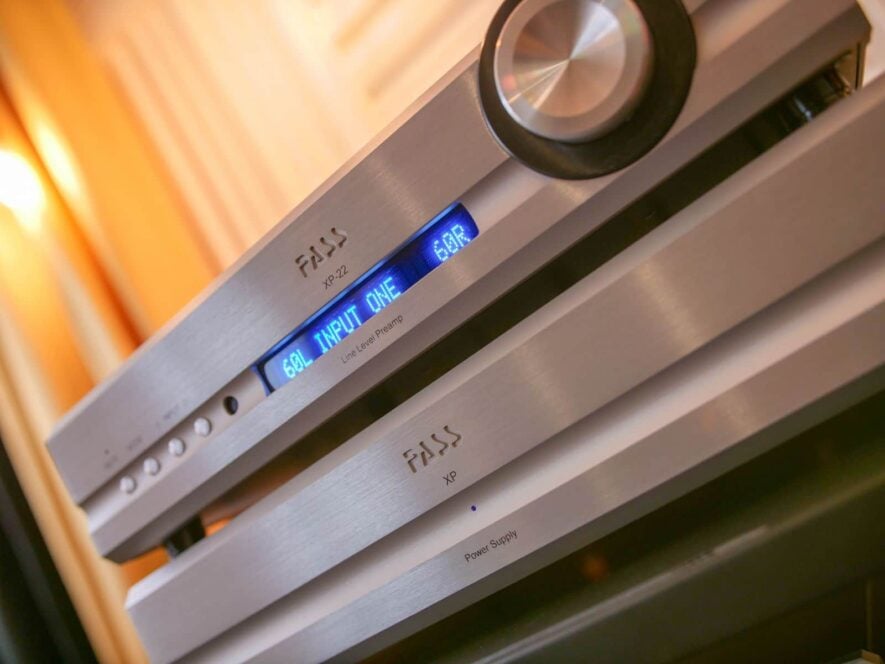
Here too, we notice how ‘studio’ the Weiss Helios is. Coupled to a preamp, even if it is the Pass Labs XP-12, it is less so than when the Helios is connected directly to the power amp, the Pass Labs X150-8. We haven’t heard the TAD Evolution Two speakers so rhythmic and precise before. Everything is right.
CD and the Helios
We connect the Revox C221 CD player to the Helios via the coax output. As we expected, the result is stunning. Familiar CDs reveal even more layers, instruments take on more dimensions.
For example, Denny Dias’ sitar solo on Steely Dan’s “Do It Again” (1972). I have never heard this one so round and ringing. The sitar in question is not a special instrument and I know the solo as a somewhat screeching interlude after which the organ takes over again. Very special.
And to stay with Steely Dan for a moment; we play two different masters of this track. The original mastered by Roger Nichols and the Citizen edition, mastered by Glenn Meadows. No sooner have we been able to enjoy both versions in such detail.
Compare with the Grimm MU2
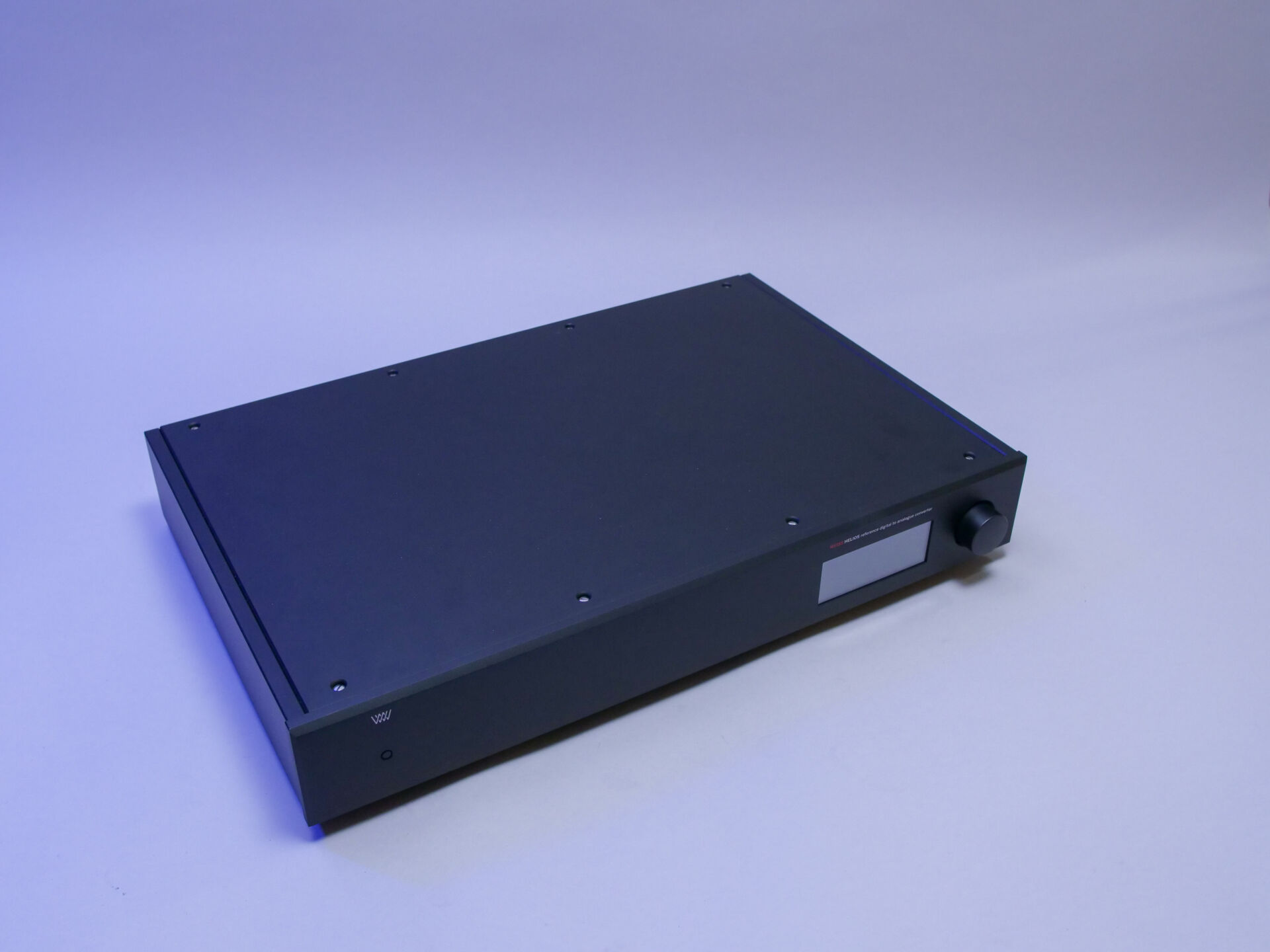
We are curious to see how the Weiss Helios and the Grimm MU2 compare. In many ways, they are similar dac/streamers. Both from a brand associated with its namesake. Eelco Grimm and Daniel Weiss are respected names in the studio world. The MU2 and Helios are also similar in price. Both players sound smooth with plenty of detail at the same time. Microdynamics are excellent. MU2 and Helios both have a web interface that works very pleasantly. Both have a headphone output on the back.
Let us state clearly that in this class there is no question of ‘better or less good’. Both players are reference class. There are taste differences, though. The Grimm MU2 sounds more conversational, more neutral across the sound spectrum. The Helios is a bit warmer and fuller and – here it comes again – rhythmic. A big plus of the MU2 is the availability of Tidal Connect which works and sounds excellent, the Helios has Qobuz Connect.
On the other hand, Audirvāna does not work on the MU2 and it does on the Weiss Helios. The MU2 again has single ended and balanced analogue inputs. Yes, even on the MU2, the analogue part is fine. In our ideal picture, we would want the Grimm and the Weiss!
