



Building
Contents
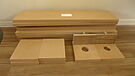
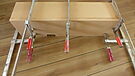
So much for the theory, now on to the building. The cabinets are made of 28 mm MDF, I ordered these from an online sawing service. Marked out the holes for the speaker units with a makeshift compass (cardboard with nail) and had them milled out by a cabinetmaker.
I had the crossover built by Speakerland, you could do it yourself, but high-quality soldering and properly attaching all components to the bottom plate really requires experience and skill. Professionals work at Speakerland and they have been doing this for 40 years, then I can be sure the filter is properly assembled and tested.
The Seas Exotic drivers and damping material were also ordered there. Gluing the cabinets is a precise job that requires large and good glue clamps. When tightening the clamps, the wood can sometimes shift, so this requires some skill and precision, but otherwise goes pretty smoothly. The baffle can only be glued in place after the crossover-filter, the damping material and the internal wiring are in place.
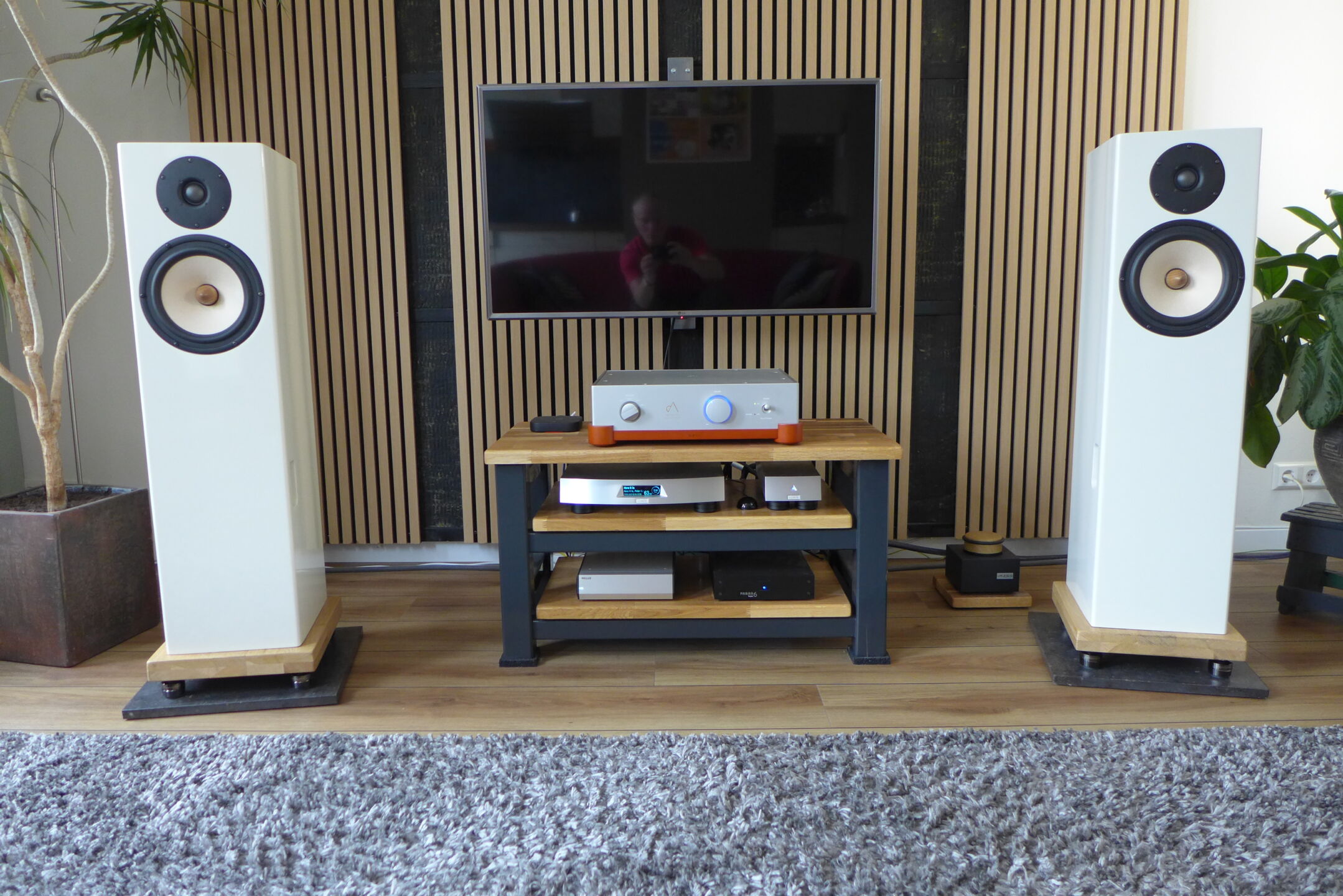
The damping material is held in place with some staples. I made another base myself for the speakers, these were not in the design and would be needed to fill the bottom space with sand. I bought an oak coffee table on the second hand marketplace for 10 euros and cut two feet out of it. At the bottom I fitted them with strike nuts, so that I could also put them on isolation feet.
The internal wiring is from Mundorf, the Angelique Copper line, secured with silver solder. For the connectors I chose connectors from GR research, they have a low mass and a large contact area. You don’t want a lot of metal between the external and internal cable, the connector is pure gold plated copper and creates almost a direct connection.
The cabinets were painted by a professional in a high-gloss metallic pearl white color. They turned out to be hefty guys, measuring 95 x 25 x 30 cm and weighing 30 kilos each. The finish may not match a commercial speaker, but I am quite satisfied and feel comfortable to put the result in my living room.
The cross over frequency is at 1.6 KHz, the speaker has a nominal impedance of 6 ohms (and does not dip beyond 5), an average sensitivity of 89 db and a frequency range of 50 Hz to 28 KHz.
For those looking for deep bass maybe a bit tricky, but to properly reproduce bass deeper than 50 Hz, everything has to be right, from your source and power supply to the acoustics of your listening room. Better a well defined bass than a deep bass that sounds messy, you can get really annoyed by that, for me 50Hz is deep enough (I hope).