



Listening.
Contents
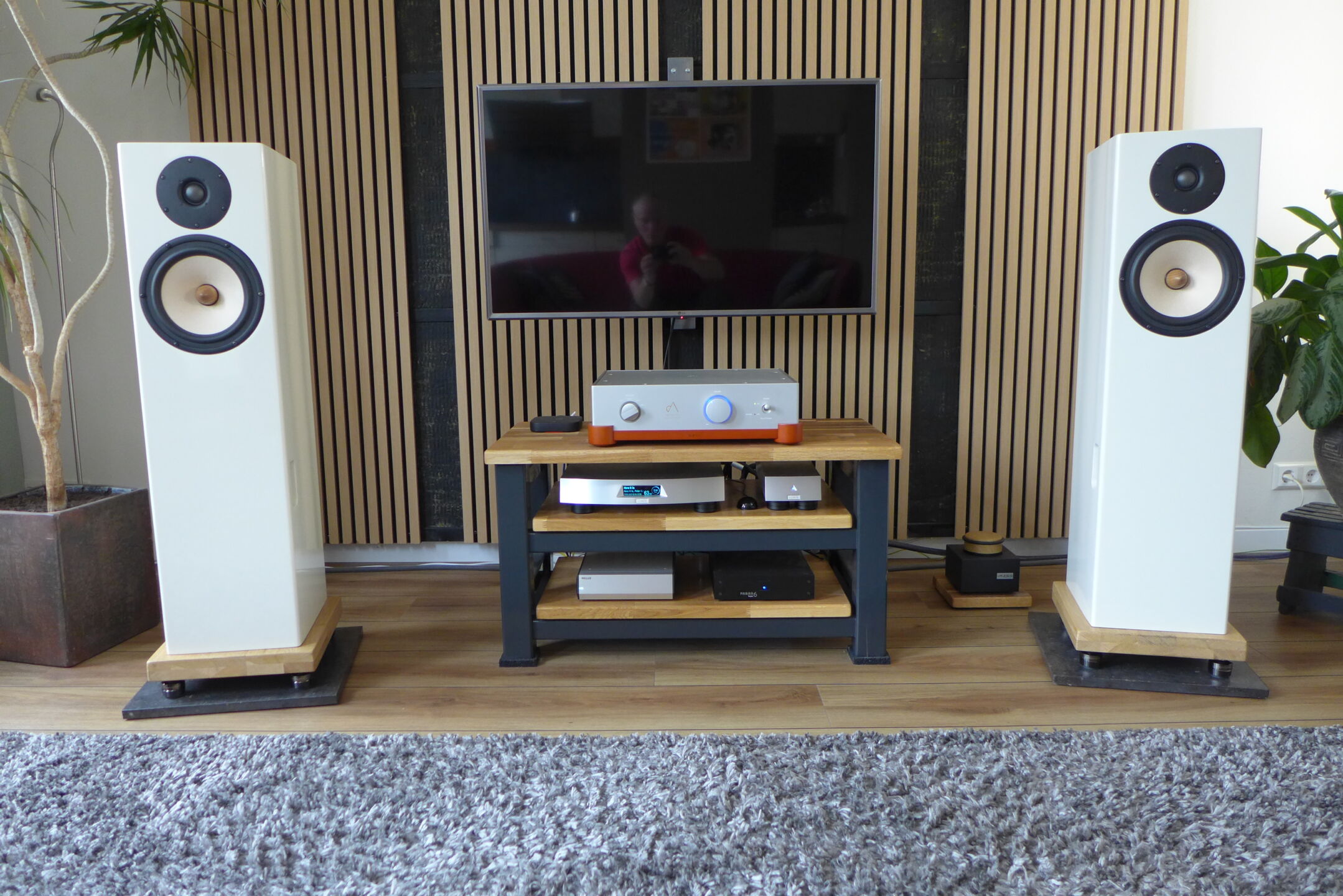
And then the big question: how does it sound? The speakers are ready and yes… I know, let them burn in for a while before serious listening. But I couldn’t contain my curiosity. So I immediately hooked up the pair to the system in the living room and sat down for a good listen.
After an initial wow for the spaciousness and bass the feeling turned around, the high-mids are a bit sharp and the bass a bit messy. Also, the midrange seemed a bit underrepresented. Conclusion: I couldn’t listen to this for long.
First, set it aside for a week and let it play at low volume. But to speed up the process a bit, I also let it play louder for an hour or so every now and then. After that week, I started listening again. It was a whole lot better, but certainly not yet what I expected from it. Quite honestly: I was disappointed!
How could this be? After some tormenting of the gray matter, a moment of clarity came, hadn’t the filter builder said something about connecting the tweeter the other way around with a1st order filter? (*see explanation below). I immediately grabbed the soldering iron and torx wrench, unscrewed and reversed the tweeter connection. And yes, after an initial hesitation – it sounds a bit duller – this is starting to sound right! After some more playback, it seemed to click.
When I compare them to my old speakers they sound much more spacious, more detail and livelier. But actually they still sound a little too lively for my taste.
The description of the damping says that an over-damped cabinet sounds lifeless and sluggish. That gives me the idea to experiment a bit more with the damping. At first I put in too much and it does indeed sound dull and lifeless. Eventually I settled on putting another layer of Bondum 800 under the drivers on the baffle, which was just right for my taste.
Playing around with dampening is really a search for balance. As soon as you start damping more you lose detail, spaciousness and speed, but if you dampen too little a speaker can sound too bright very quickly, so taste definitely plays a role here as well.
After more than a month of listening, I decided to fill the bottom space where the crossover is located with dried quartz sand. After some sleuthing on the Internet and consulting various experts, opinions ranged from not doing anything to subtle improvement. For me and in this speaker at least, the result was clearly audible and a valuable improvement: the sound becomes purer, if there was any fraying it is now gone, the instruments are better seperated, which also leads to a better detail and spaciousness.
As far as I’m concerned, I don’t have to do anything about it now. I enjoy listening to it, it is a clear improvement over my previous speakers and I am regularly moved by the music, which seems like a good sign.
The total price of the Exotic Tower homebrew came out at €5296 for a pair (see below). That’s definitely a lot of money. And for that money you can also buy very nice speakers. Think B&W 700-series, KEF R-series or Monitor Audio, Audio Physic…. DALI… Dynaudio… you name it. All major manufacturers do have models in this class.
Can you outperform a commercial manufacturer as a homebuilder? When it comes to high end models probably not. Simply because manufacturers have much more expertise and resources at their disposal and can experiment and optimize a lot (new materials, new drivers, cabinet design, damping, cross over design and components, etc.), just until the soundstage is balanced. And if they don’t like the design, it goes in the trash and they start over.
If you’re going to do that as a homebuilder you’re going to have a very, very long and expensive project. It’s simply not doable. So the Exotic tower uses good basic components and some interesting design features, I could start shouting all sorts of things about the sound but for an independent opinion I asked Jaap if he would listen to them in Alpha Audio’s reference system. They spent a long morning in Haarlem and he gets to pass judgment.
| woofer | 826 |
| crossover | 761 |
| tweeter | 499 |
| spray | 350 |
| wood package | 85 |
| connectors | 27 |
| wiring | 57 |
| bolts | 15 |
| visaton damping | 10 |
| base | 5 |
| bondum damping | 10 |
| sealing band | 3 |
| total | 2648 |
* With a first order filter the phase shifts by 90° around the transition, therefore you have to reverse the polarity of one of the drivers. Normally the tweeter and woofer work together in the transition area to obtain a flat frequency response, but if the phase is not right then they work against each other and the cross over area will be irregular.
A listening session at Alpha Audio
Here is a small impression of this fine homebrew speaker, driven by the Alpha Audio reference system.
I – Jaap – can be very brief: this speaker is excellently balanced. The bass is clearly less deep than the TAD E2s, but the bass we hear is very nice: not “boomy”, but rather tight, insightful and fast. This is clearly due to the fine SEAS unit.
The midrange transfers downright perfectly with the bass and the mids blends very nicely into the treble. I can’t hear any phase problems, which brings a lot of calmness to the reproduction.
Striking is the scale and ease with which this speaker plays. It all feels very normal; natural. This causes Arno and I to actually talk pretty quickly about the music and no longer about the system. In my opinion, that’s a very good sign. After all: it’s all about listening to music…. right?
By the way, it is nice to sit on the couch with a fellow prog-rock fan for once. It makes it a little easier for this fan to play some less accessible music.
Measurements Alpha Audio
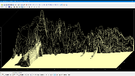
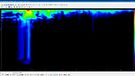
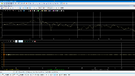
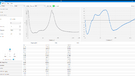
The measurements actually show what we heard: the in-room response is pretty straight. Impedance is very favorable; this speaker is not difficult to drive. The waterfall shows good results. We only see a resonance between 50 and 100 Hz. Fixing this could bring the speaker to an even nicer level. It is not directly audible and we see here most likely a large part of reflex-port operation. All in all decent results.